In a nutshell
- Bring photo ID for everyone: the catamaran trip from Arbatax runs 8 hours with a live guide, and keep documents in a dry pouch.[1]
- Reef-safe sunscreen and a hat, reapplied after every swim on open water where the deck offers little shade.
- Grippy shoes or trainers: Cala Mariolu is known for white pebbles and limestone cliffs, not soft sand.[2]
- One roll-top dry bag for phone, cards, keys and a towel, clipped on rather than loose on a cushion.
- A thin windproof layer for the ride home, when a wet swimsuit and a sea breeze feel colder than the beach.
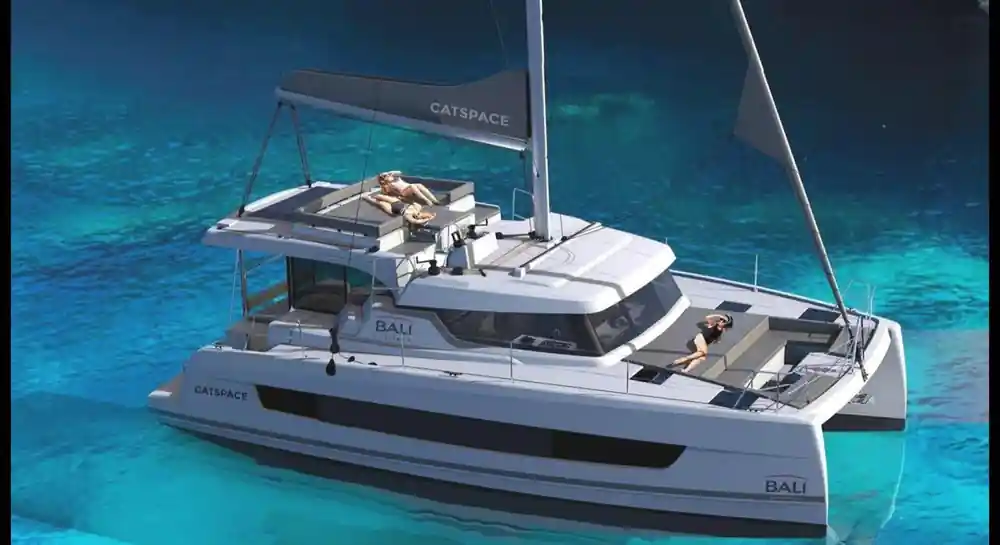
- Top choice Catamaran Trip with Lunch from US$276 Duration8 hours[1]Rated4.91 from 268 reviews[1]GuideEnglish, French, Italian, Spanish[1]BookingReserve now & pay later[1] Check availability
- Baunei Coast by Boat from US$75 Duration9 hours[3]Rated4.42 from 549 reviews[3]GuideItalian, English[3]BookingReserve now & pay later[3] See this tour
- RIB to Mariolu & Goloritzè from US$69 Duration3 hours[4]Rated4.84 from 705 reviews[4]GuideEnglish, Italian[4]BookingReserve now & pay later[4] See this tour
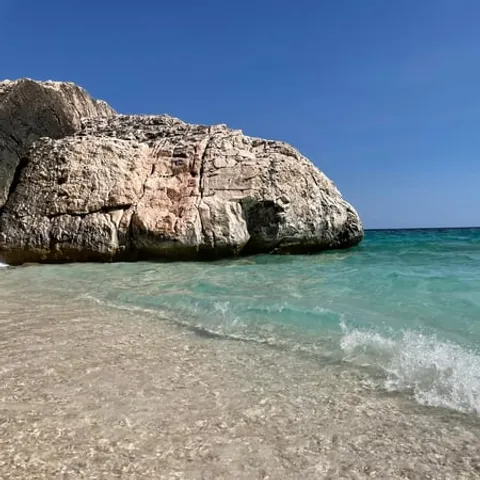
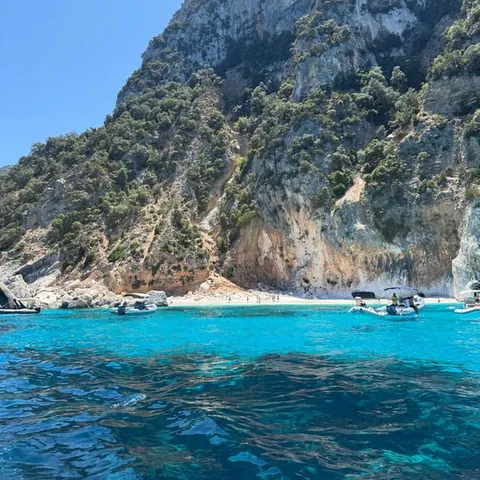
The Selvaggio Blu trekking starts in Pedra Longa and ends in Cala Luna, winding through unspoiled paths, hanging within sea and mountain.
Verdict: pack light, pack dry, book the catamaran
What to bring aboard
- Photo ID for every traveller, kept in a pouch that stays dry
- Reef-safe sunscreen, a hat with a chin strap and sunglasses on a cord
- Swimwear under your clothes and a quick-dry towel
- One roll-top dry bag for phone, cards and keys
What to leave ashore
- Bulky camera bags and anything you cannot get wet
- Beach umbrellas and folding chairs, which take up deck space
- Heavy jumpers; a thin windproof layer does the same job
- A tight evening plan, because the day runs at its own pace
Why your ID should come aboard
Photo ID is the one thing you cannot improvise once the boat has left the harbour. Carry it for every traveller in your group, adults and children alike, and put the cards in a pouch that stays dry all day rather than in the beach bag that waits on the quay. Keep a picture of each document on your phone as a backup, and note the booking reference somewhere other than the same pocket. In Sardinia the same document does duty at hotel check-ins, car hire desks and pharmacy counters, so it earns its place in the bag whether or not anyone asks to see it on the water.
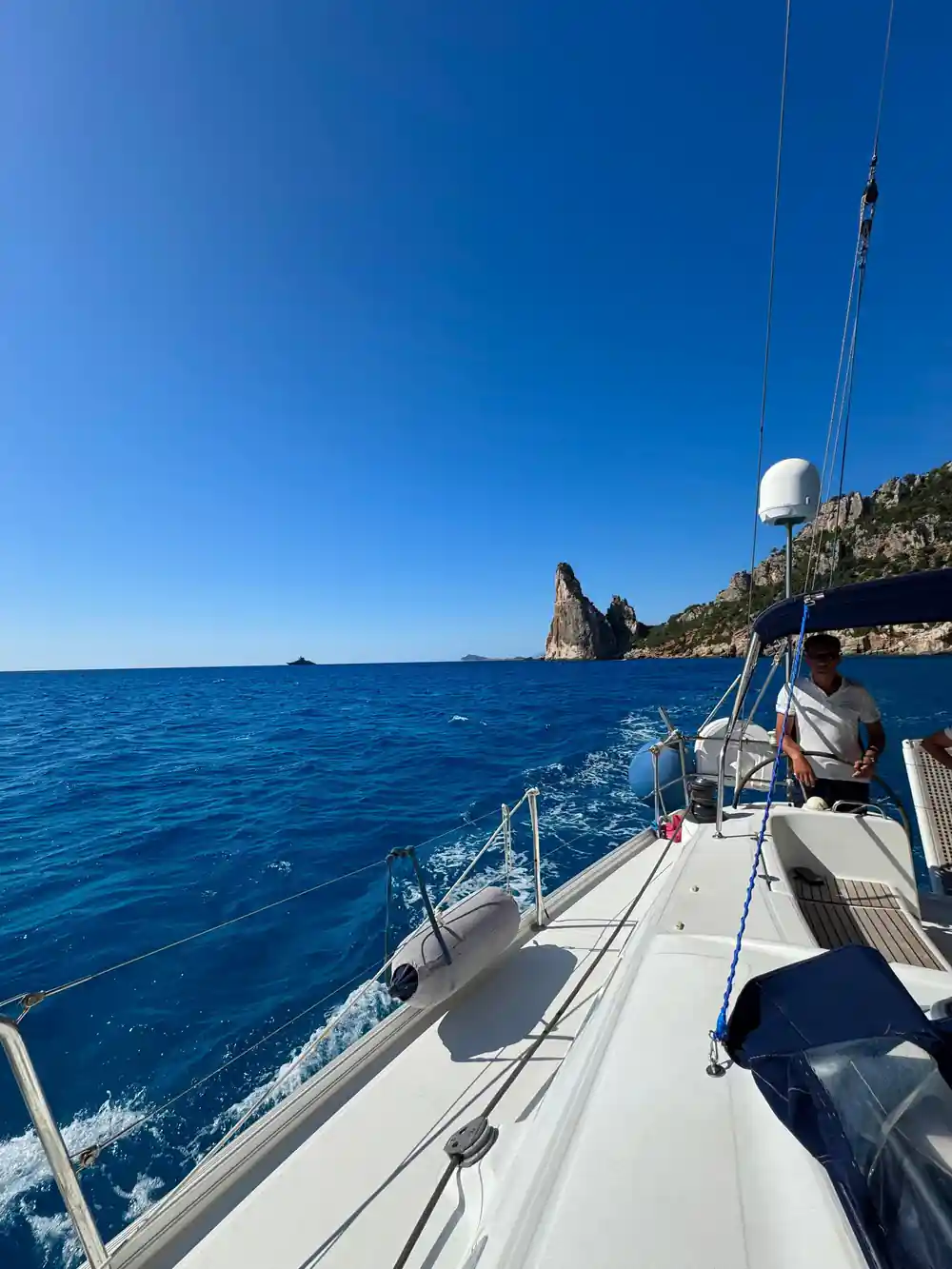
The catamaran trip from Arbatax runs for 8 hours with a live guide, which is a long stretch to be without your documents if they are sitting in a rucksack back at your hotel.[1] Deck life is restless: you move between shade and sun, sit on cushions, stand up for a swim, and small flat items are the ones that slide, snap or go over the side. A zip pouch on a lanyard, or a hard case at the bottom of a dry bag, keeps a passport, a licence and a bank card together and easy to find.
If you arrive early, the harbour area repays a slow walk. The Rocce Rosse of Arbatax are named after the porphyry cliffs that rise from the sea in the bay east of the port, a tourist neighbourhood of Tortolì, and the white and red granite behind them makes a good photograph while you wait to board.[5]
Sunscreen on a marine protected coast
The Gulf of Orosei sits inside the Parco Nazionale del Golfo di Orosei e del Gennargentu, a protected area in Sardinia, and the coves you swim in are part of that landscape.[6] Mineral or reef-safe sunscreen is the easy choice here: apply it before you board, top it up after every swim, and do not rely on one application in the morning. A long-sleeved rash vest does more for a full day on deck than any cream, and it doubles as a layer if the breeze picks up.
Check the Arbatax UV index the night before you sail and plan your shade for the middle of the day. A hat with a chin strap stays on in the wind, sunglasses on a cord stay off the seabed, and a catamaran deck gives you a choice of sun and shade as the hours pass. The water itself is warm: the average sea water temperature in the Gulf of Orosei in August is 26.5 °C, with a minimum of 24.4 °C and a maximum of 29 °C over the last decade.[7] Pack lip balm with sun protection and a light shirt to pull on between swims.
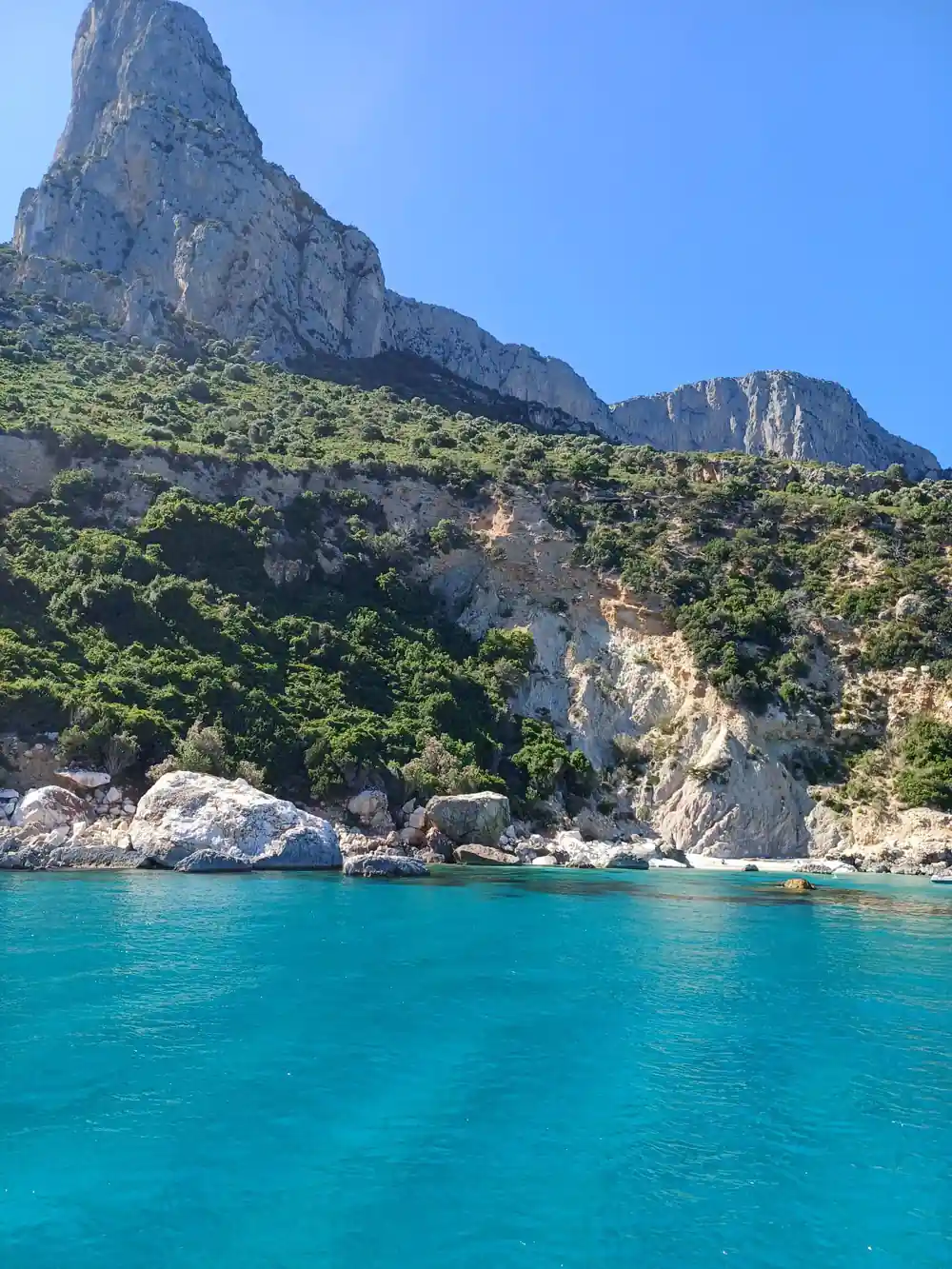
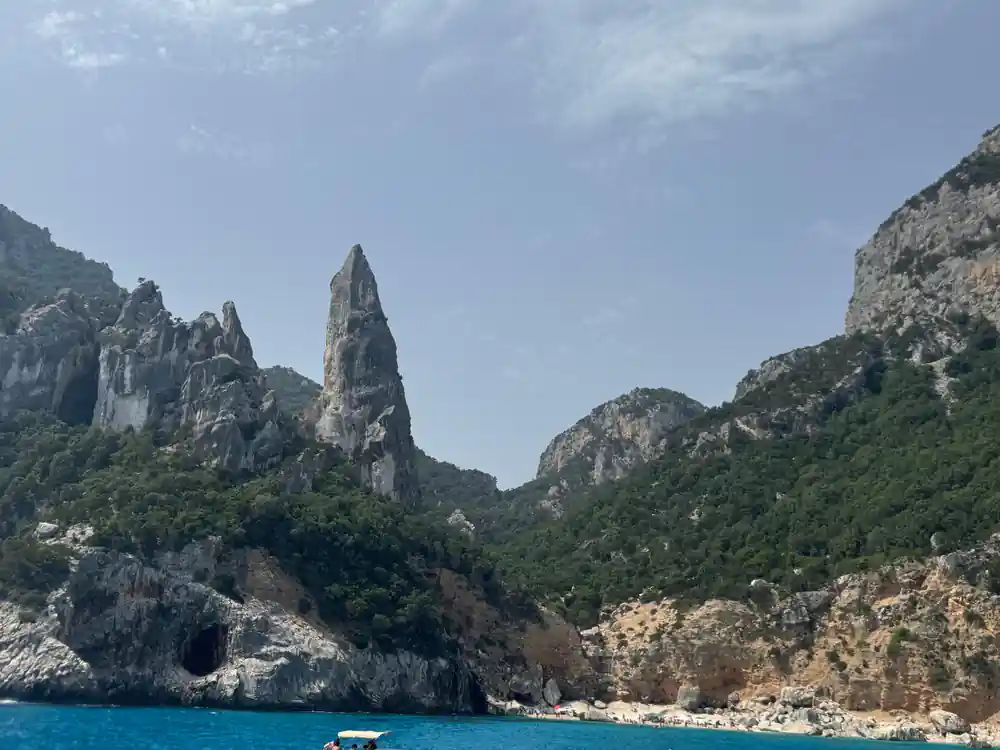
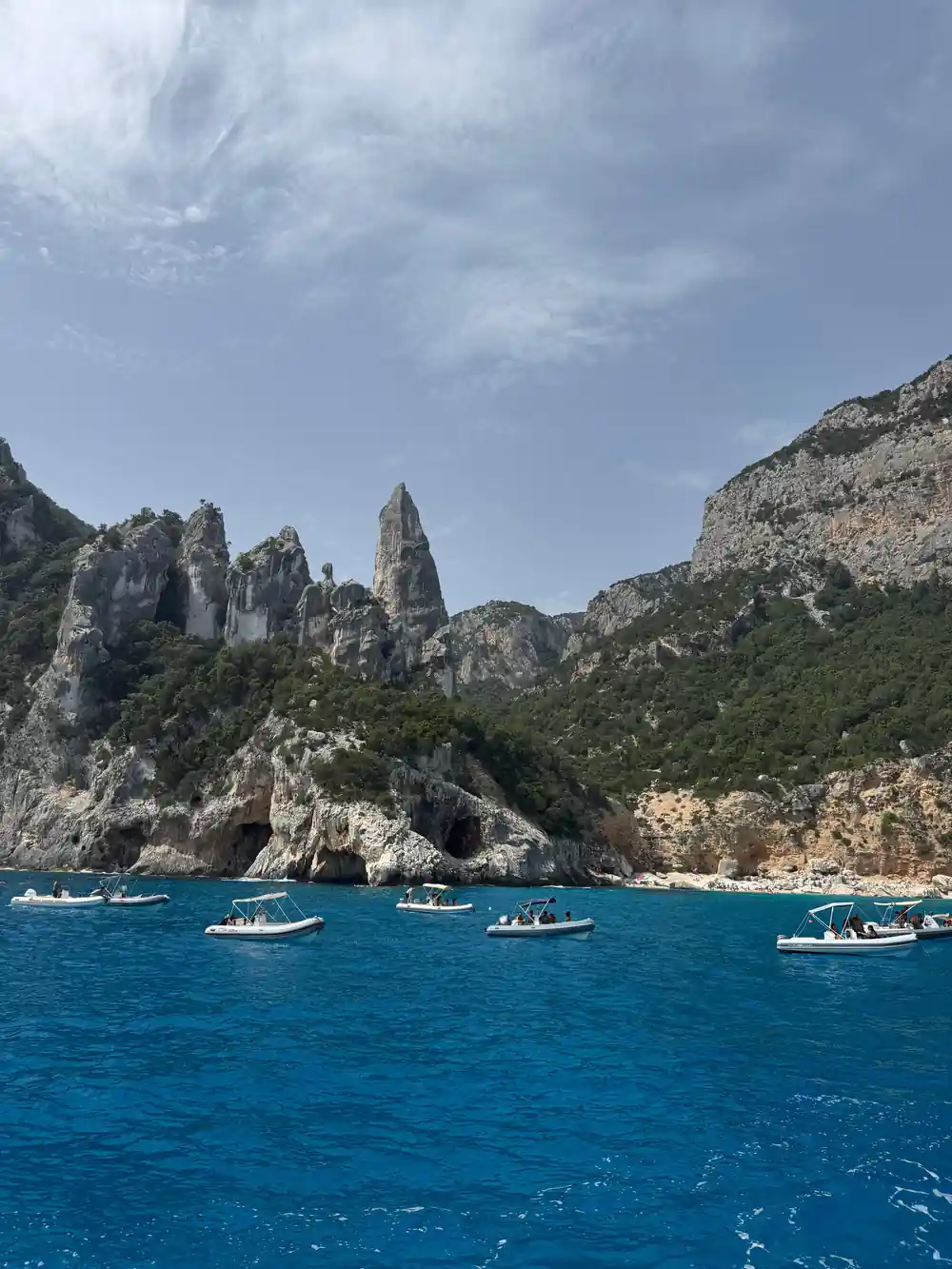
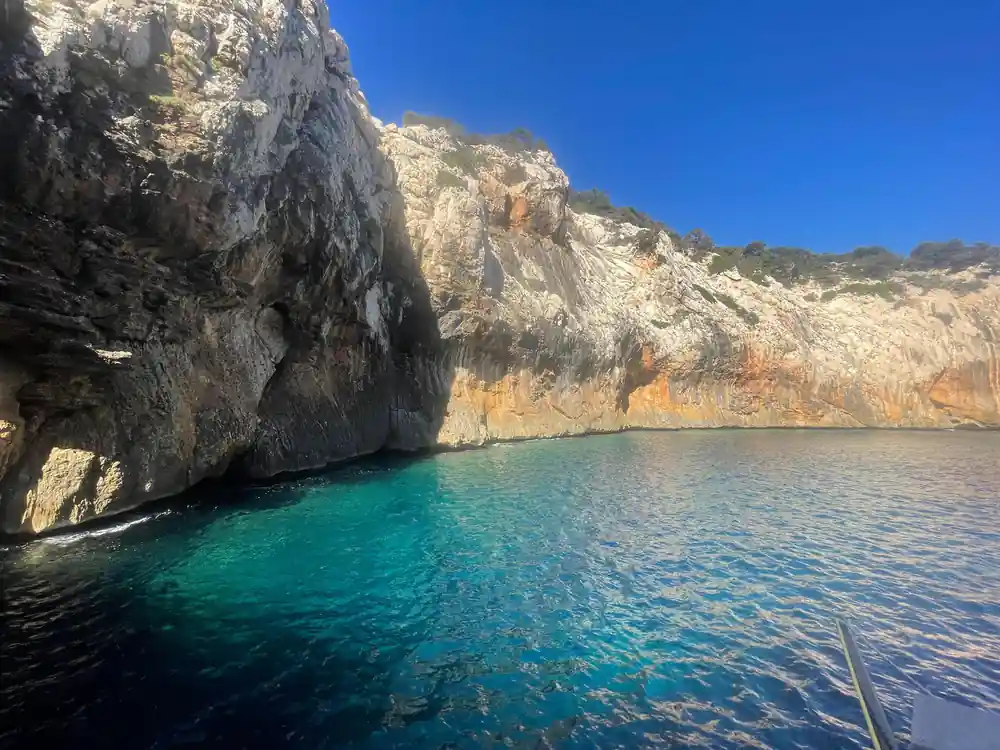
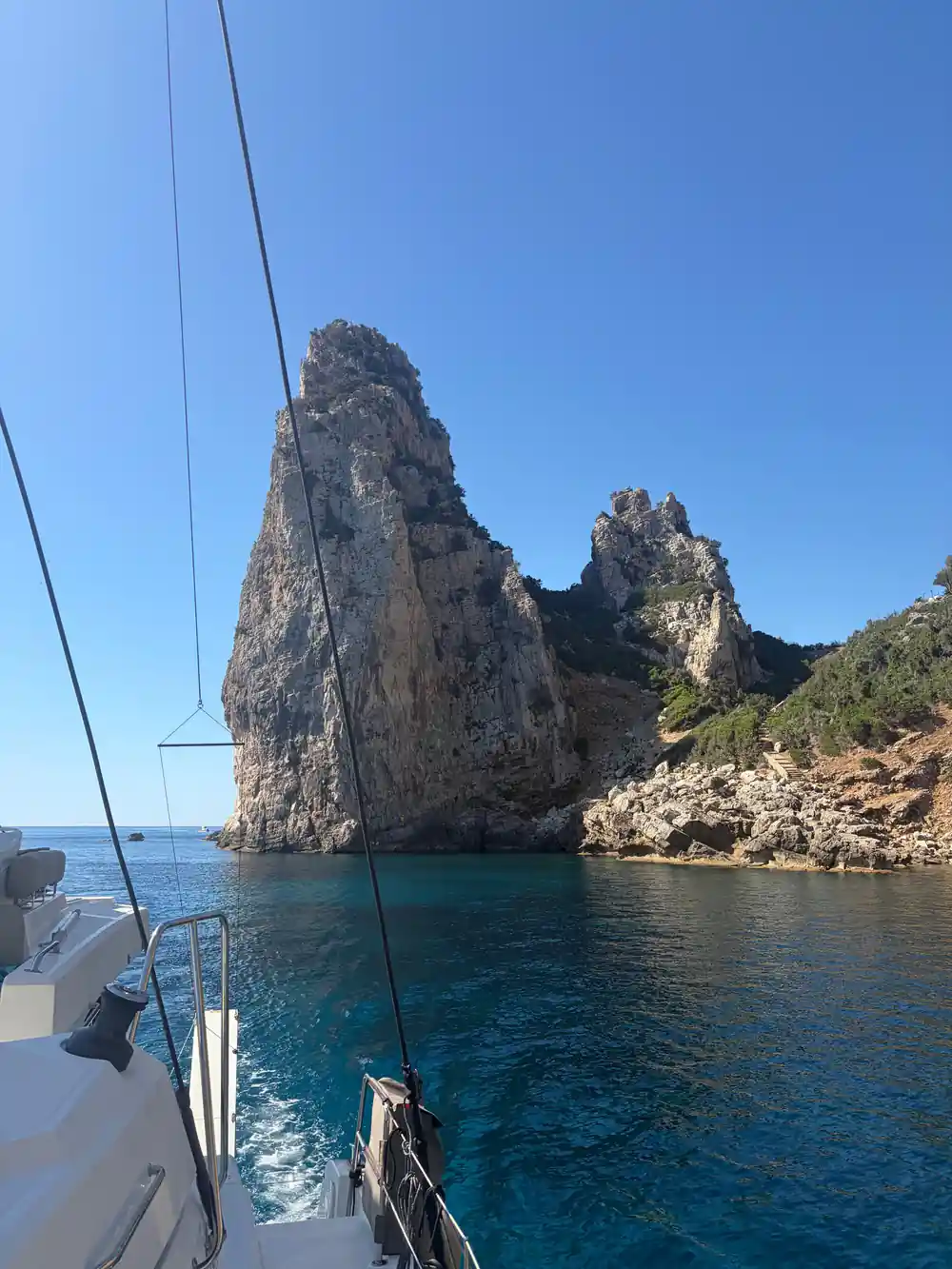
White limestone cliffs fall straight into water so clear the catamaran seems to float on light.
Footwear for rocky pebble beaches
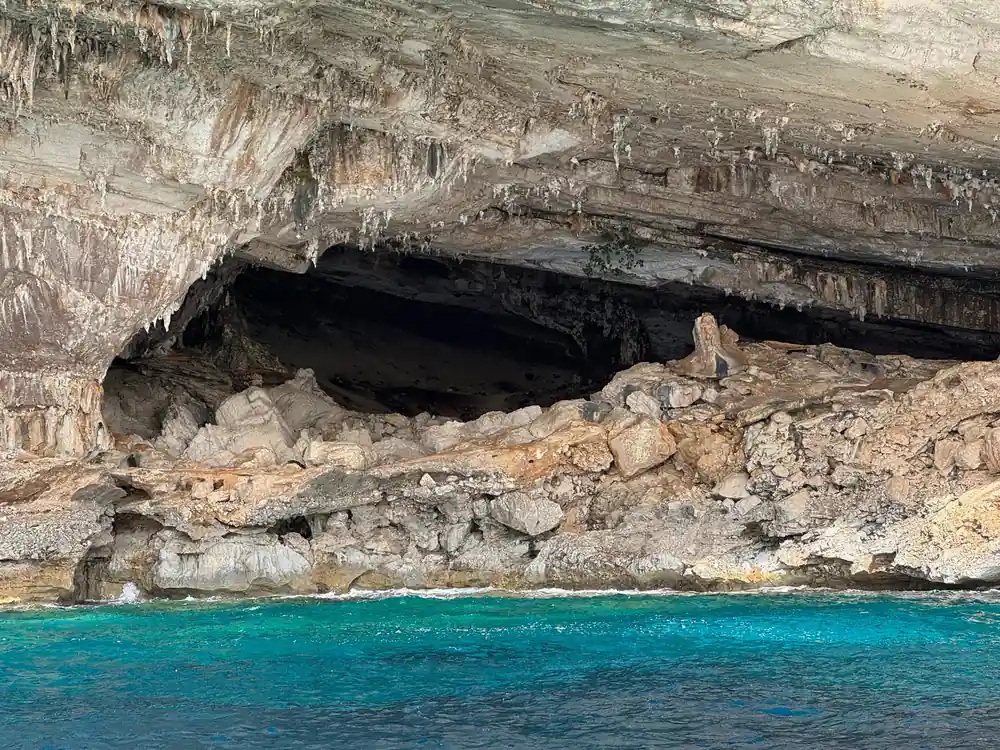
Cala Mariolu is famous for its crystal-clear water, white pebbles and dramatic limestone cliffs that plunge into the sea, and that last detail settles the question of what to wear on your feet.[2] Pebbles are not soft sand underfoot, and wet limestone shelves can be slick where the swell has just washed over them. Bring trainers or sandals with a proper rubber sole and a heel strap, and keep a softer pair for the deck, where shoes come off anyway.
Getting ashore usually means a short step from the boat, sometimes with a bag in one hand, sometimes straight out of a swim, and you will want both hands free and both feet sure. Bare feet are fine once you are parked on a towel and less so on hot stones or the walk to shade. If the coast tempts you onto land, the Selvaggio Blu trekking route starts in Pedra Longa and ends in Cala Luna, winding through unspoiled paths hanging within sea and mountain, and it shares the coastline with the bays you see from the water.[8]
Keeping electronics safe from salt and spray
Salt is patient. A phone that spends a whole day on deck picks up a fine film that shows up later as a sticky screen and a cloudy lens, and spray works its way into every open seam. One roll-top dry bag per person solves most of it: phone, cards, keys and a spare towel in together, clipped to something solid rather than lying loose on a cushion. Add a small microfibre cloth for the lens and the screen.
The Gulf of Orosei stretches 30 kilometres along the eastern coast of Sardinia, and a catamaran covers a good slice of that in a day, with long stretches of open water between the stops.[9] If you want the phone out for photographs, a waterproof pouch or a zip bag is enough, and a lanyard means you are not juggling it one-handed at the rail. Leave the big camera bag ashore, or accept that it will come home with salt on it and sand in the zip.
from US$276
The Gulf Orosei catamaran trip from Arbatax runs for 8 hours with a live guide and free cancellation up to 24 hours in advance.[1]
Layering against wind and temperature shifts
A day on the water holds three or four different weathers. The morning can be still and hot, midday is full sun on open water with no shade but the bimini, and the run home often brings a breeze that makes a wet swimsuit feel cold. A thin windproof layer, a quick-dry towel and one spare t-shirt cover all of it without filling a bag, and they weigh almost nothing when you are not wearing them.
Think in thin layers rather than one heavy jumper, and dress to swim rather than dressing up. Swimwear under light clothes means you are ready the moment the boat stops, and a long-sleeved top is useful at both ends of the day. Shoes dry faster than socks. A large towel or a light sarong doubles as shade, a pillow on the deck and something dry to sit on when the cushions are still wet from the last swim.
Managing seasickness on a catamaran
Catamarans are a stable platform, and a wide deck gives you room to stand, sit and face the horizon, which is usually the thing that settles a queasy stomach. If you know you are prone to it, take your usual remedy before you step aboard rather than waiting for symptoms, and stay outside in the breeze instead of going below or into a cabin. Keep food simple: a dry breakfast, water through the day, and skip the last glass of wine the night before.
Pick a seat where you can see where the boat is going, and stay there rather than moving around. If a long day on the water sounds like too much, there is a shorter way to see the same coast: a RIB tour from Arbatax to Cala Mariolu and Cala Goloritzè lasts 3 hours, from US$69, with a driver who speaks English and Italian, and free cancellation up to 24 hours in advance.[4] Same water, same limestone, far less time afloat.
Snorkel gear: bring your own or make do without
A mask that fits your face is the difference between a happy hour in the water and a leaking one, and rental masks are built for the average head. If you already own a mask and snorkel, they take up almost no room in a bag and repay the packing every time you swim. If you would rather travel light, ask what is available before you book, borrow what is offered, and rinse anything borrowed in fresh water at the end of the day. Fins are the bulky item, and they are the one piece of kit most people are happy to do without on a single-day trip.
If you would rather set your own pace, no licence is needed to hire a dinghy for exploring the Gulf of Orosei, though the driver must be at least 18 years old.[10] The gulf rewards swimming: clear water, pale limestone and shallows that stay bright well below the surface. Cala Luna, one of the classic stops in the area, is in Sardinia on the central eastern coast and is reachable from Cala Gonone, a hamlet in the township of Dorgali in the province of Nuoro.[11] For a change of scene, adult tickets for the Grotta del Bue Marino cost €10 in the ordinary season and €12 in June, July, August and September.[12]
Access rules are the other thing that shapes a day in the bays. Access to Cala Goloritzé requires a mandatory reservation from April to October and is limited to a maximum of 250 people at the same time.[13] Worth knowing before you build a day around one cove.
August sea water temperature in the Gulf of Orosei
Average, minimum and maximum sea water temperature in the Gulf of Orosei in August over the last decade, from seatemperature.info.[7]
What a day on the water costs
US dollar from-prices on the GetYourGuide listings for these Arbatax departures.[1][3][4]
When to book and when to go
Packing for the day
Documents first
Photo ID for each traveller, in a pouch or a hard case that stays dry while you swim.
Sun cover
Sunscreen, a hat with a chin strap, sunglasses on a cord and a long-sleeved top for the middle of the day.
Shoes that grip
Rubber soles for wet pebbles and limestone, plus a soft pair for the deck.
One dry bag each
Phone, cards, keys, a spare towel and a thin windproof layer, all in a roll-top bag you can carry ashore.
Leave the rest ashore
Beach umbrellas, heavy camera bags and spare shoes stay in the car or at your hotel.