In a nutshell
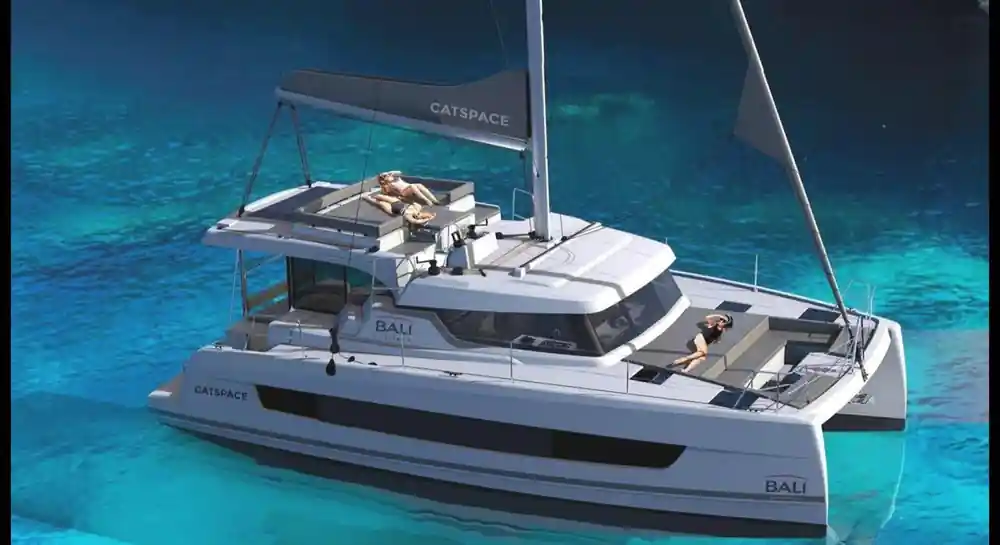
- A catamaran day from Arbatax with lunch, a live guide and 8 hours on the water, from US$276.[1]
- Best for school-age children, babies in carriers, and grandparents who want to sit, watch and swim a little.
- Sea water in the Gulf of Orosei averages 26.5 °C in August, with a minimum of 24.4 °C and a maximum of 29 °C.[2]
- Cala Goloritzé needs a mandatory reservation from April to October and is limited to a maximum of 250 people at the same time.[3]
- Free cancellation up to 24 hours in advance for a full refund, and you can reserve now and pay later.[1]
- Top choice Catamaran Trip with Lunch from US$276 Duration8 hours[1]Rating4.91 from 268 reviews[1]CancellationFree up to 24 hours before[1]PaymentReserve now, pay later[1] Check availability
- Baunei Coast Day Tour from US$75 Duration9 hours[4]Rating4.42 from 549 reviews[4]CancellationFree up to 24 hours before[4]PaymentReserve now, pay later[4] See this tour
- Cruise to Cala Goloritzè from US$79 Duration7.5 hours[5]Rating4.30 from 3,722 reviews[5]CancellationFree up to 24 hours before[5]PaymentReserve now, pay later[5] See this tour
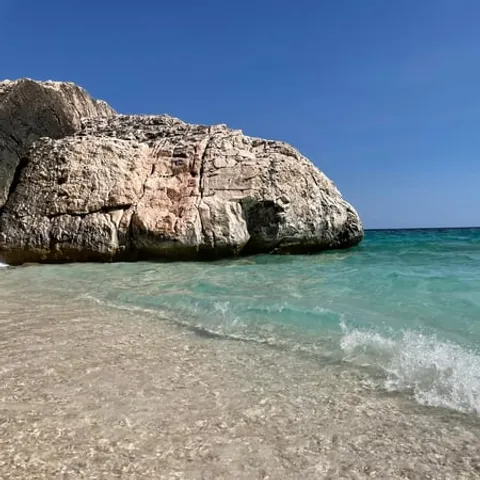
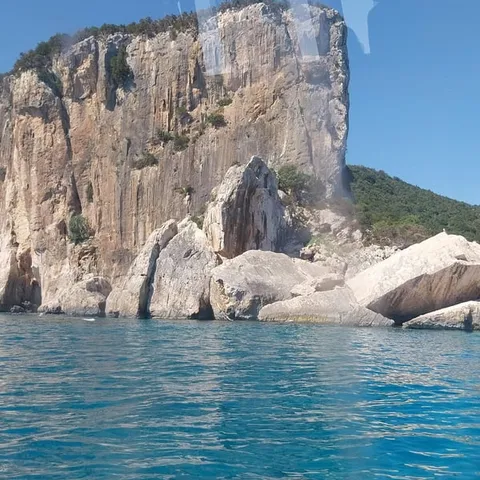
Reservations are mandatory from April to October and allow access for a maximum of 250 people at the same time .
Who the catamaran day from Arbatax suits
What to pack for the family
- Sun hats, high-factor sunscreen and a light long-sleeved layer for the boat
- Reef shoes or sandals that grip wet, pebbly beaches
- A carrier or sling for babies and a foldable shade for naps on deck
- Your booking confirmation, a refillable bottle and a dry bag for phones
Planning the Arbatax day
- Arbatax is the departure harbour, so plan your transfer from Tortolì or nearby towns
- Give yourself time at the quayside before boarding with children and bags
- Ask the operator in advance about step-free boarding and a wheelchair on deck
- Carry a little cash for drinks, ice cream or a cave ticket ashore
An 8-hour day: is it too long for toddlers?
The catamaran day from Arbatax runs for 8 hours, and the listing gives a from price of US$276.[1] A full day on the water can sound daunting with a toddler in the family, but the shape of the day matters more than the number of hours. There is the run out of the harbour, a long stop in a bay, lunch, time in the water and a slow cruise home. Toddlers do better when the day is broken into small pieces.
Ask yourself whether your child can nap in a carrier or a buggy, and whether they will sit through a meal on a moving boat. Children who sleep anywhere tend to have a good day out. Children who need a dark room at an exact hour, and the adults around them, will find a long day on the water hard. No boat changes that.
If a full day feels like too much, there are shorter trips on the same coast. The Grotta del Bue Marino and Cala Luna boat tour runs for 4 hours and starts from US$46.[6] The RIB trip from Arbatax to Cala Mariolu and Cala Goloritzè runs for 3 hours and starts from US$69, and it suits older children who enjoy a fast ride.[7] A half day tells you how your child handles a boat before you commit to a long one.
Where babies sleep and rest during the voyage
Babies sleep where they always sleep, which on a boat usually means against you. A soft carrier or sling keeps a small baby close and leaves your hands free, and a muslin cloth over the carrier cuts the glare. When you book, ask about shade on deck and whether a folded pram can come aboard, because both are easier to arrange in advance than at the quayside.
Feed a baby before boarding, then keep the first hour quiet. Motion on a wide catamaran is gentle, but new sounds and a new routine tire small children quickly. Find a seat with some shade, keep the nappy bag and a bottle within reach, and let the crew know where you are sitting so they can keep an eye on you.
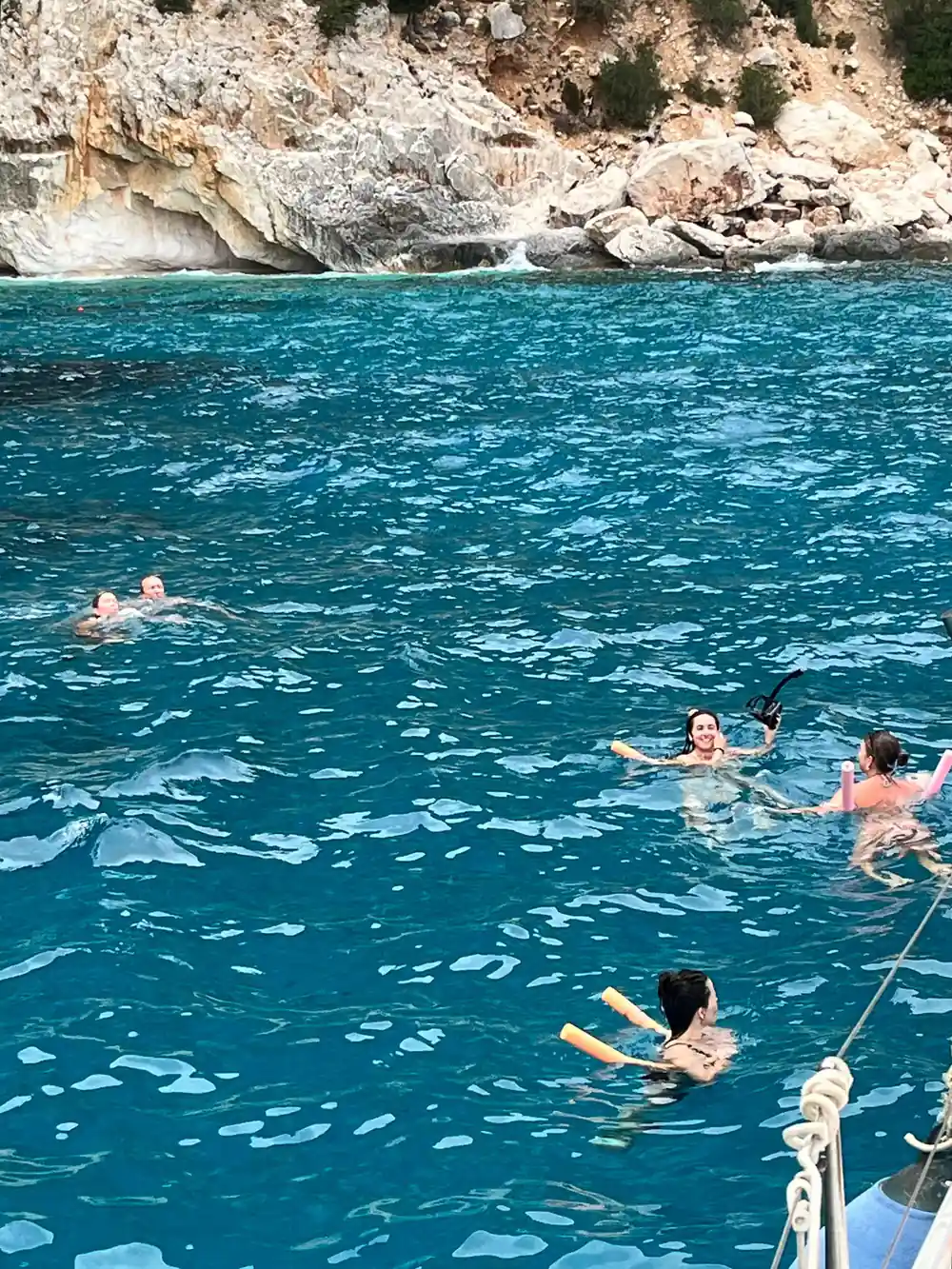
The sea in high summer is warm enough for a short dip with a baby in your arms. In the Gulf of Orosei the average August water temperature is 26.5 °C, with a minimum of 24.4 °C and a maximum of 29 °C over the last decade.[2] Bring a dry towel, a hat for the baby and a second layer for the ride home, when wind on wet skin feels colder than it looks.
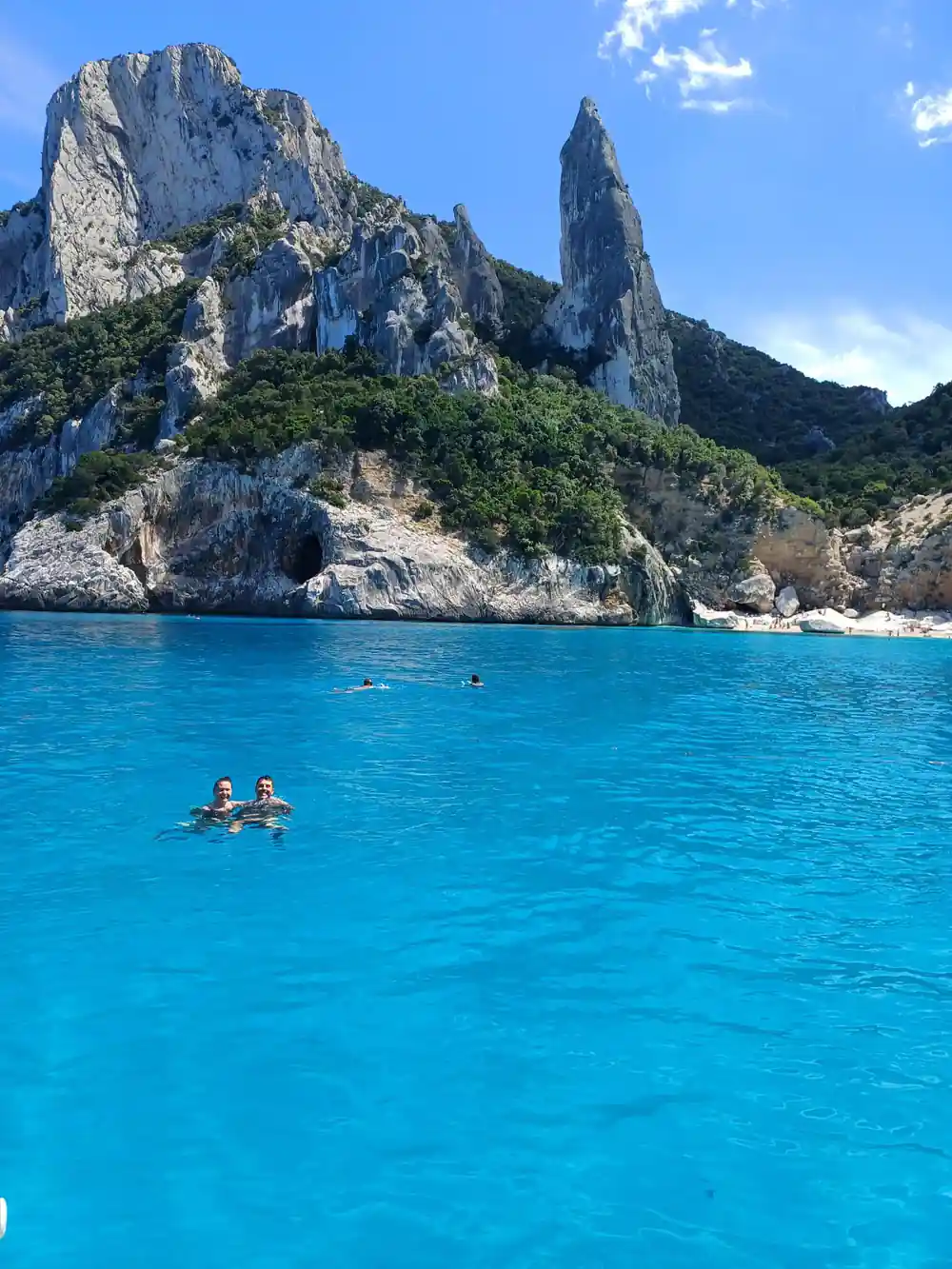
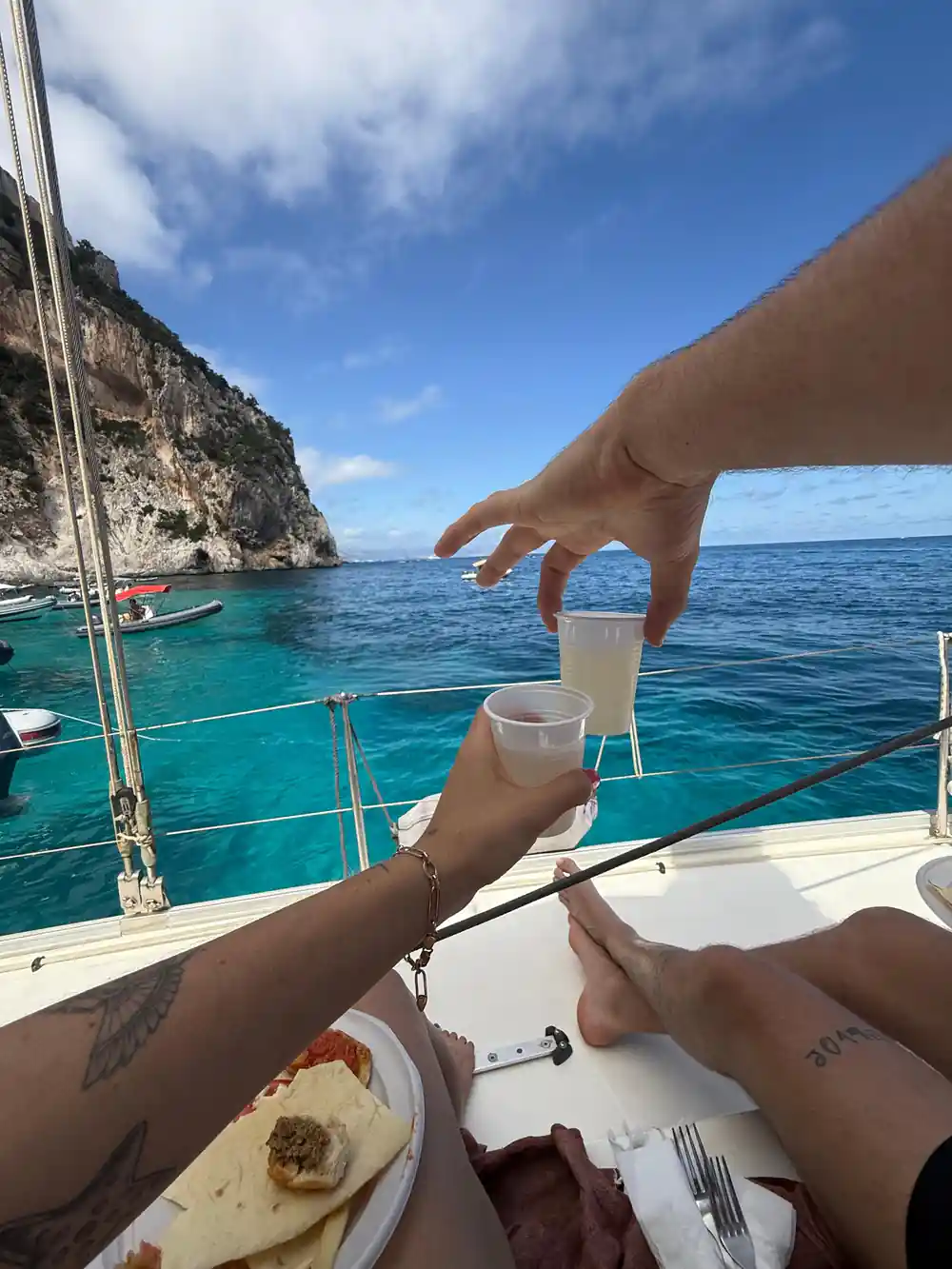
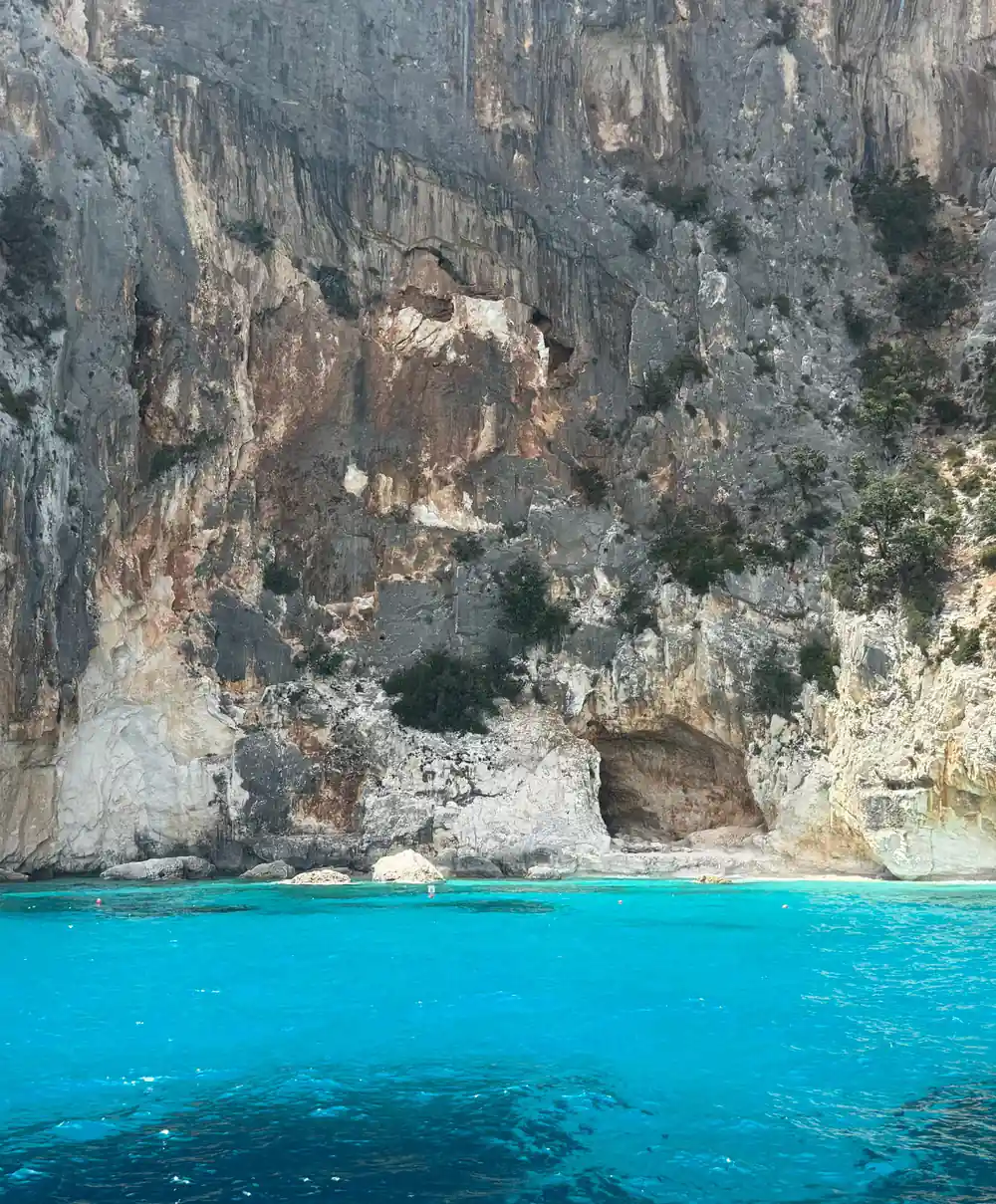
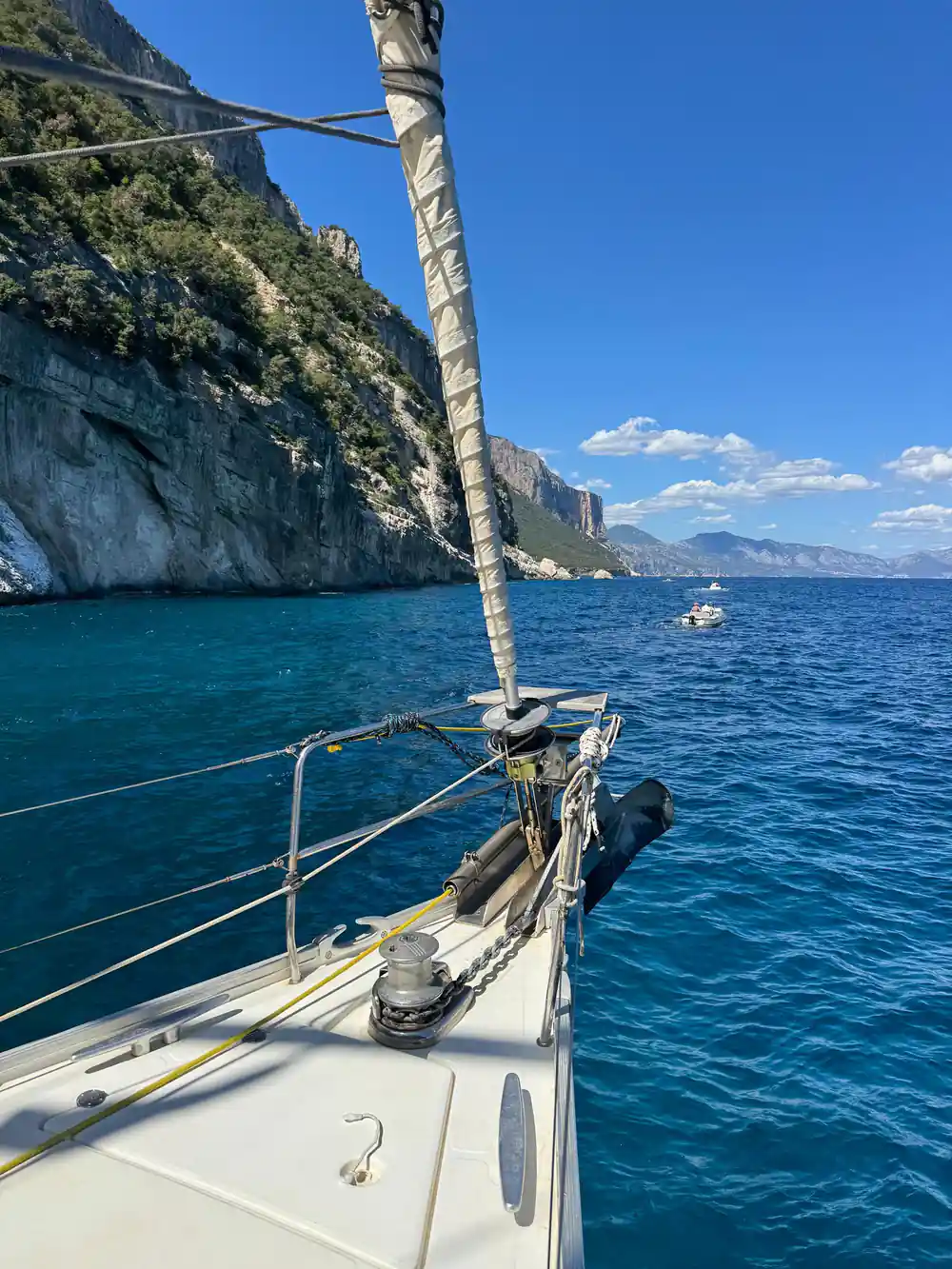
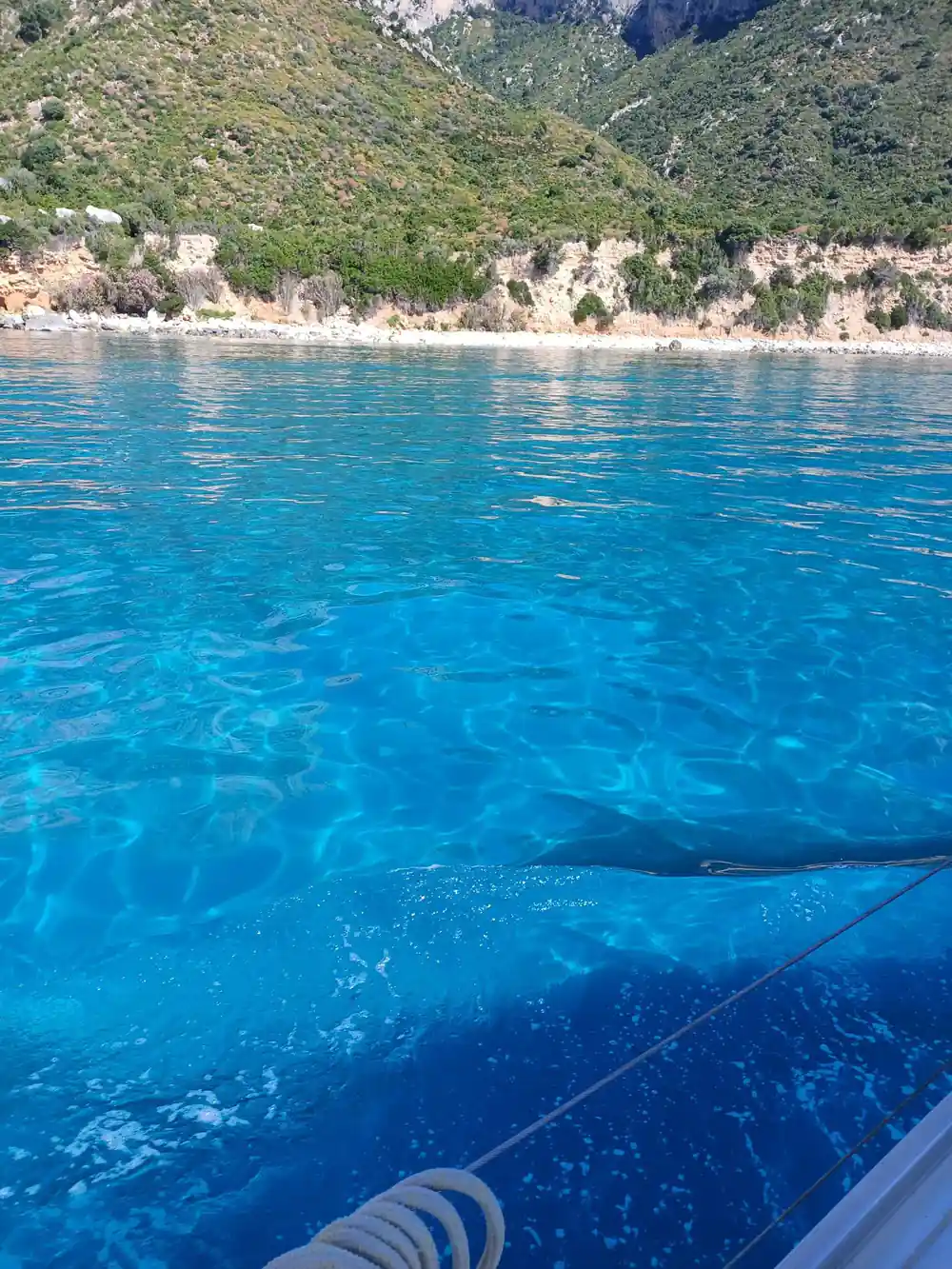
Turquoise water and white limestone cliffs along the Gulf of Orosei, seen from a moored catamaran
Swimming and water safety for non-swimmers
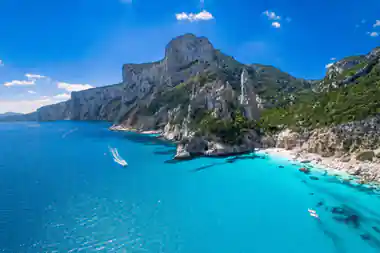
Cala Mariolu is known for crystal-clear water, white pebbles and dramatic limestone cliffs that plunge into the sea.[8] Clear water is a gift to nervous swimmers, because you can see the bottom under your feet. It also means the shore is pebbly rather than sandy, so bring shoes you can wear into the water and step in slowly.
A non-swimmer should get in only with a flotation vest that fits properly and an adult within arm's reach. Agree a hand signal for wanting to get out, and stay near the place where you climbed in. Tired arms are the usual reason a confident paddler gets into trouble, so keep swims short and take breaks on deck between them.
Children who are learning to swim do best with a vest, a float and a parent, in that order. If you would rather have a guide in the water, there is a 2-hour snorkeling trip in the Orosei Gulf from US$52 that can be booked on its own.[9] It is a good first taste of mask and fins before anyone tries snorkelling from the catamaran.
Boarding, moving around and safety for older passengers
Boarding is at Arbatax, and the step from the quay to the boat is the moment to slow down. Take the crew's hand if it is offered, put bags down before you step across, and keep both hands free. Shoes with grip help on wet decks, and a walking stick or a folding seat is easy to carry if it makes the day more comfortable.
A catamaran is a wide, stable platform, which makes moving around easier than on a narrow hull. Even so, the calmest rhythm for older passengers is to walk while the boat is still or moving slowly, and to sit with back support when it is under way. Choose a seat out of the wind and keep a hat and water beside you.
Bring medications in a small bag you keep with you rather than in a locker, and take them at your usual times. The trip lasts 8 hours, so a morning dose and an afternoon dose may both fall inside the day.[1] A sun hat, a long-sleeved shirt and a refillable bottle make more difference to how you feel at the end of the day than anything else.
from US$276
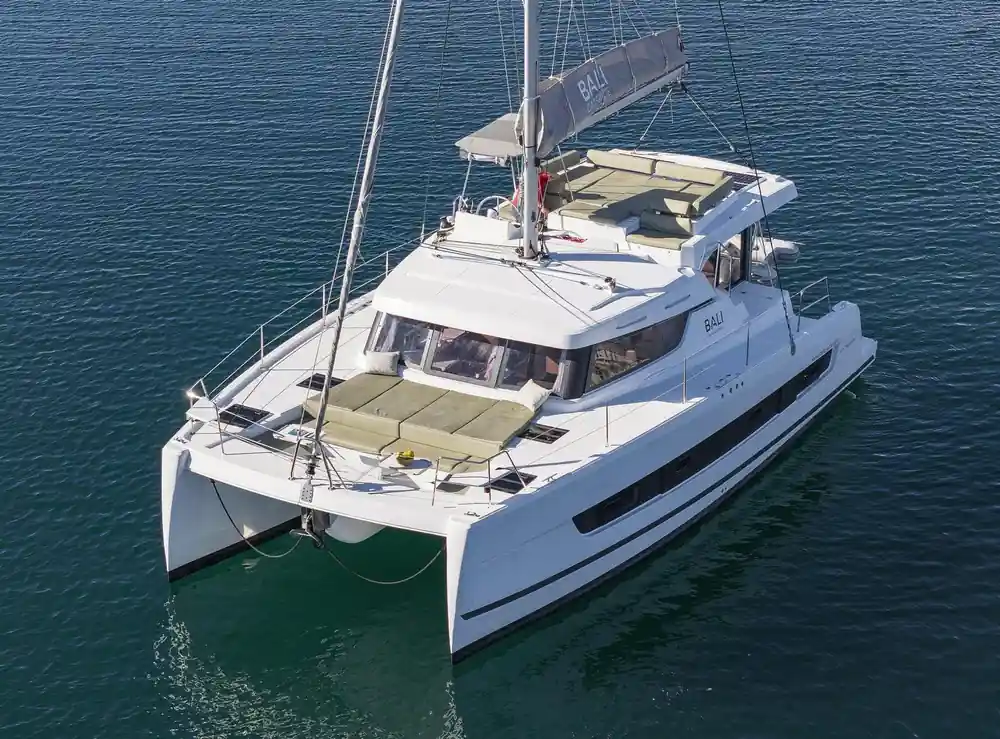
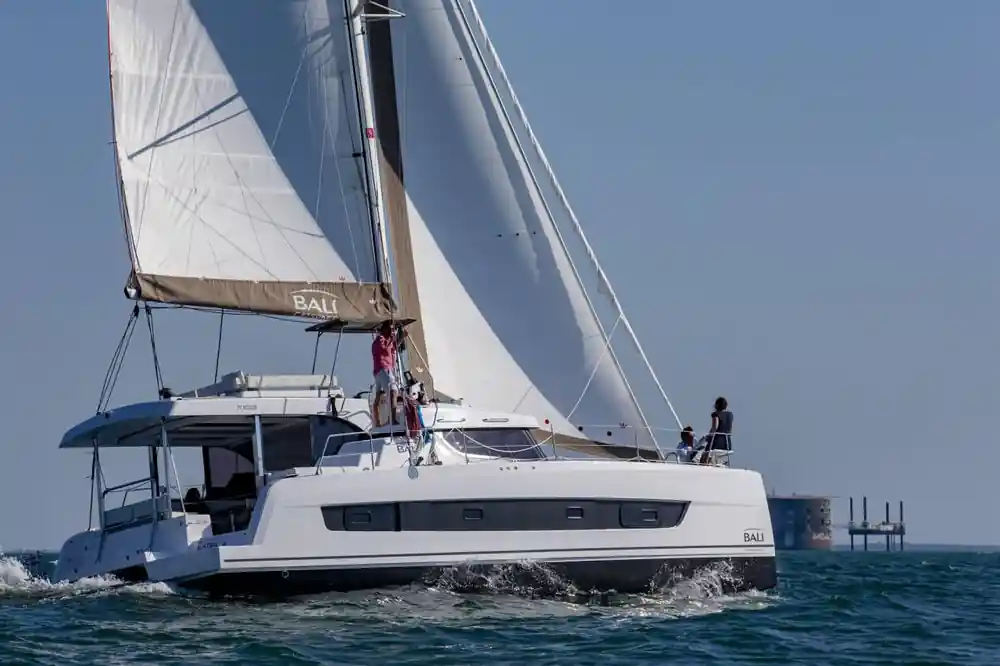
Catamaran day from Arbatax with lunch: 8 hours on the water, a live guide and a 4.91 rating from 268 reviews.[1]
Wheelchair access at Arbatax and on the catamaran
This catamaran trip does not list wheelchair access, so contact the operator before you book and ask about the gangway, the width at the boarding point and whether a wheelchair can stay on deck. Other Gulf of Orosei trips do list wheelchair access, including the dinghy excursion from Cala Gonone to Cala Mariolu and Cala Goloritzè[10] and the 6-metre dinghy rental without a boat licence from Cala Gonone.[11]
Getting a wheelchair onto any boat is a transfer rather than a roll-on, unless the operator has a ramp. Ask what happens at the quayside in Arbatax, who helps with the transfer and where the chair can be stored during the day. A folding chair is easier to stow than a rigid one, and a cushion makes a boat seat more comfortable for a long afternoon.
If a boat transfer looks difficult, there are wheelchair accessible things to do nearby. The Cala Gonone Aquarium entry ticket is listed as wheelchair accessible, costs from US$16, and covers 2 hours.[12] A gentle indoor stop is a good plan for a mixed-age group when the afternoon heat builds.
Pets and animals on board
If you want to bring a dog, ask the operator before booking rather than turning up at the harbour with one, because other passengers share the deck and the space is used by people, towels and bags. Assistance dogs are a separate question and worth raising early, with the paperwork ready for the crew.
If animals are part of what your family enjoys, the area has options ashore. Horse riding on the beach near Orosei takes 1 to 2 hours and starts from US$92.[13] A guided sunset ride on the beach near Orosei lasts 1.5 hours and starts from US$115.[14] Both run as small group trips, which suits children who are new to horses.
Keeping children entertained between swimming stops
Between swims there is more time than you think, especially on an 8-hour day.[1] Pack a small bag per child with cards, a sketchbook, a couple of pencils and a snack they like, and keep it in a dry bag so it still works after the first swim. A boat is one of the few places where children happily look out of the window for an hour.
Give them things to spot. The Gulf of Orosei stretches 30 kilometres along the eastern coast of Sardinia[15] and sits inside the Parco Nazionale del Golfo di Orosei e del Gennargentu.[16] At Arbatax the Rocce Rosse are named after the porphyry cliffs that rise from the sea east of the port.[17] Cala Luna, reachable from Cala Gonone in the township of Dorgali, province of Nuoro, is another landmark to tick off.[18] Keep the rhythm simple: a snack after each swim, a quiet half hour after lunch, and one treat saved for the run back to harbour.
How long Gulf of Orosei boat trips last
From prices for Gulf of Orosei boat days
When to book and what to know
Planning the family day
Book the catamaran
The trip from Arbatax runs for 8 hours, so pick a day when everyone can start early.[1]
Pack for shade
Hats, sunscreen, reef shoes, water and a light layer for the boat do more for a happy day than toys do.
Plan the transfer
Arbatax sits on the coast near Tortolì, so allow extra time for parking and the walk to the boat with children and bags.
Board calmly
Let the crew help with bags and hands, find a seat with shade, and agree a meeting point on deck before the first swim.
Keep the last hour easy
Save a snack and a quiet game for the run back, and pack the wet swim kit away before you reach the harbour.