In a nutshell
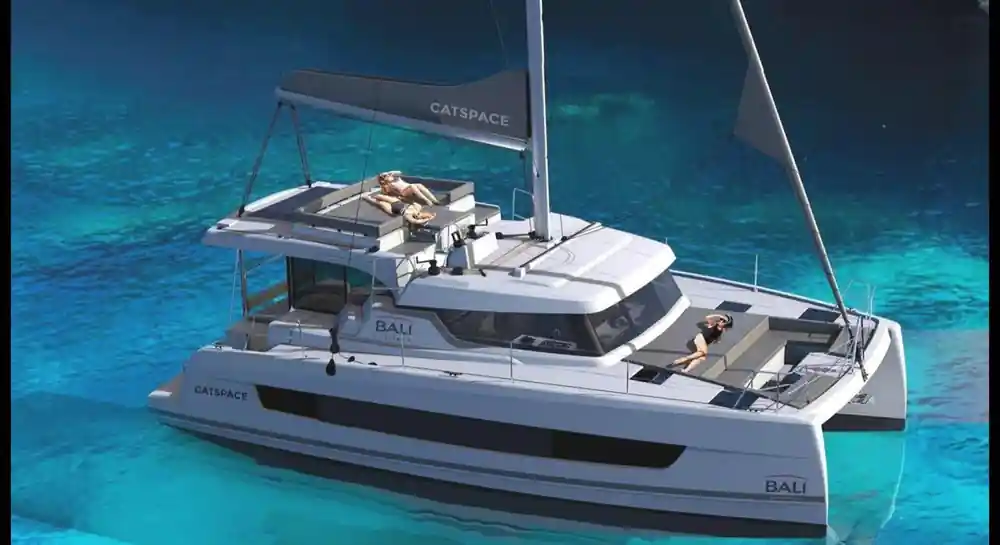
- Travellers who want the cliffs and coves without handling a boat, with a live guide and lunch on a catamaran day from Arbatax.[1]
- From Arbatax, 8 hours on the water, rated 4.91 from 268 reviews, with free cancellation up to 24 hours in advance.[1]
- The catamaran trip with lunch starts from US$276; the RIB trip to Cala Mariolu and Cala Goloritzè starts from US$69.[1][2]
- Cala Goloritzé requires a mandatory reservation from April to October and is limited to a maximum of 250 people at the same time.[3]
- Sea water in the Gulf of Orosei averages 26.5 °C in August, with a minimum of 24.4 °C and a maximum of 29 °C over the last decade.[4]
- Top choice Catamaran trip with lunch from US$276 Duration8 hours[1]Departs fromArbataxGuide languagesEnglish, French, Italian, Spanish[1]Rating4.91 from 268 reviews[1]CancellationFree cancellation, 24 hours[1] Check availability
- Baunei Coast day tour from US$75 Duration9 hours[5]Departs fromArbataxGuide languagesItalian, English[5]Rating4.42 from 549 reviews[5]CancellationFree cancellation, 24 hours[5] See this tour
- Cruise to Cala Goloritzè from US$79 Duration7.5 hours[6]Departs fromDorgaliGuide languagesItalian, English, German, French[6]Rating4.30 from 3,722 reviews[6]CancellationFree cancellation, 24 hours[6] See this tour
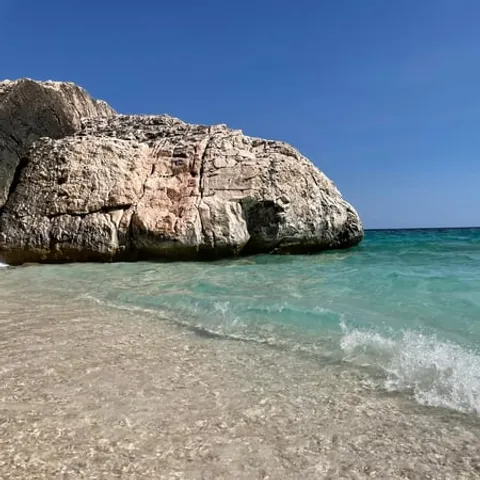
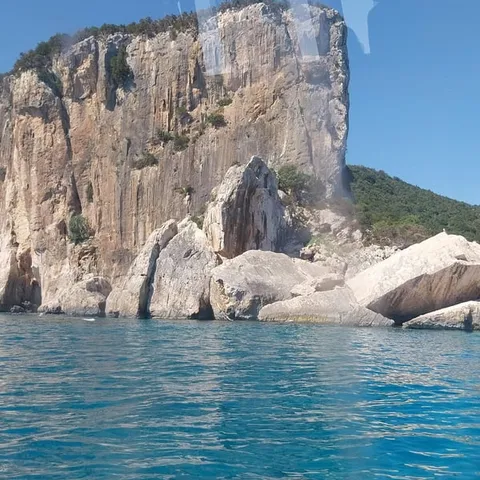
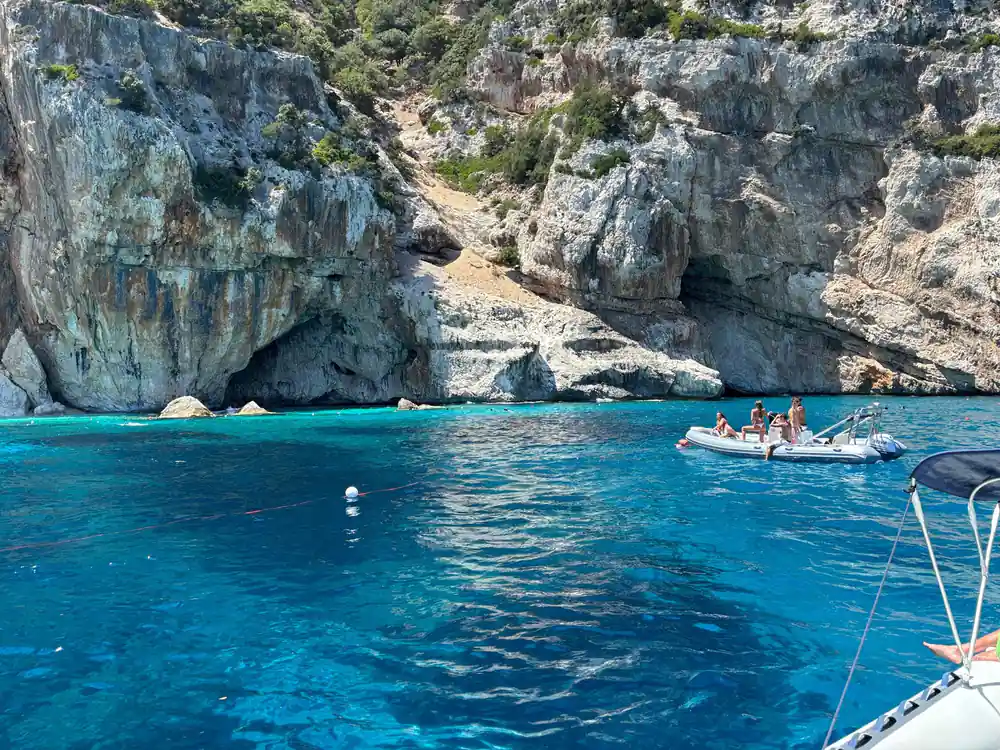
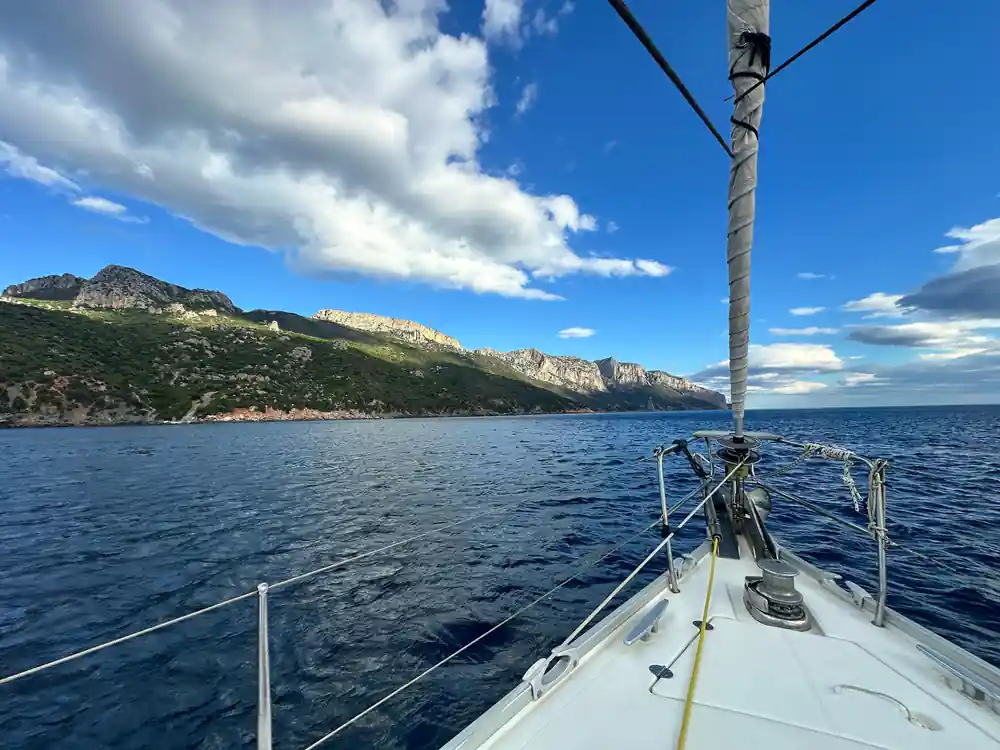
The Gulf of Orosei stretches 30 kilometres along the eastern coast of Sardinia, marked by the foothills of the Supramonte massif.
Is the catamaran trip the right day out for you?
Things to check
How the limestone cliffs rose from the sea
The Gulf of Orosei stretches 30 kilometres along the eastern coast of Sardinia.[8] Its walls are limestone, laid down on the floor of an ancient sea from the shells and skeletons of marine life, then lifted and tilted as the land rose. What you see from a boat is the inside of that story: bedding planes running along the cliff, vertical joints splitting it, and slabs that have calved off and now sit in the shallows as boulders. The coast lies inside the Parco Nazionale del Golfo di Orosei e del Gennargentu, a protected area whose name carries both the gulf and the mountains behind it.[9]
Rain, wind and waves do the carving. Water works along the cracks, frost pries at the joints in winter, and the sea undercuts the base until a block falls away. That is how the coves were hollowed out, and why so many of them open through a narrow mouth with a pebble beach inside. The process has not stopped. Every winter storm takes a little more rock off the cliff, and the pale scars of fresh falls stand out against the grey of older faces. The bays you swim in today were dry valleys once, cut by weather when the sea stood lower and the coastline lay further out.
Why the water glows turquoise
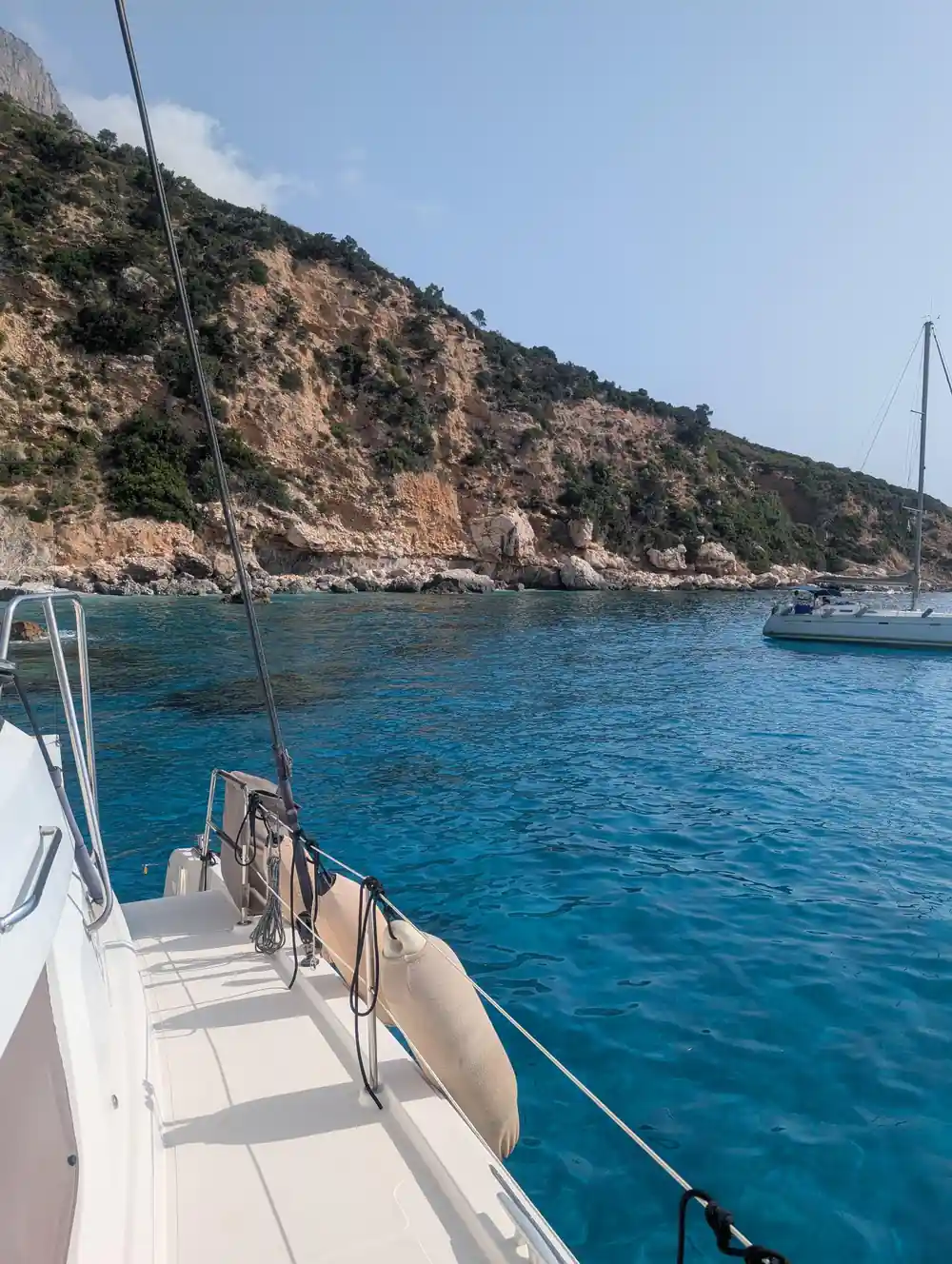
The colour is mostly light doing clever things. Sunlight entering clear water loses its reds and yellows first, so what comes back to your eye is blue. Where the sea floor below is white limestone, pale pebbles or bright sand, that blue light bounces up again and the water reads turquoise. Over dark rock or seagrass it turns deep blue or green instead. The effect is strongest where the water is shallow and the bottom is pale, and weakest where the cliffs drop straight into deep water. A boat crossing the gulf passes over both within a short distance, which is why the colour keeps changing as you look down.
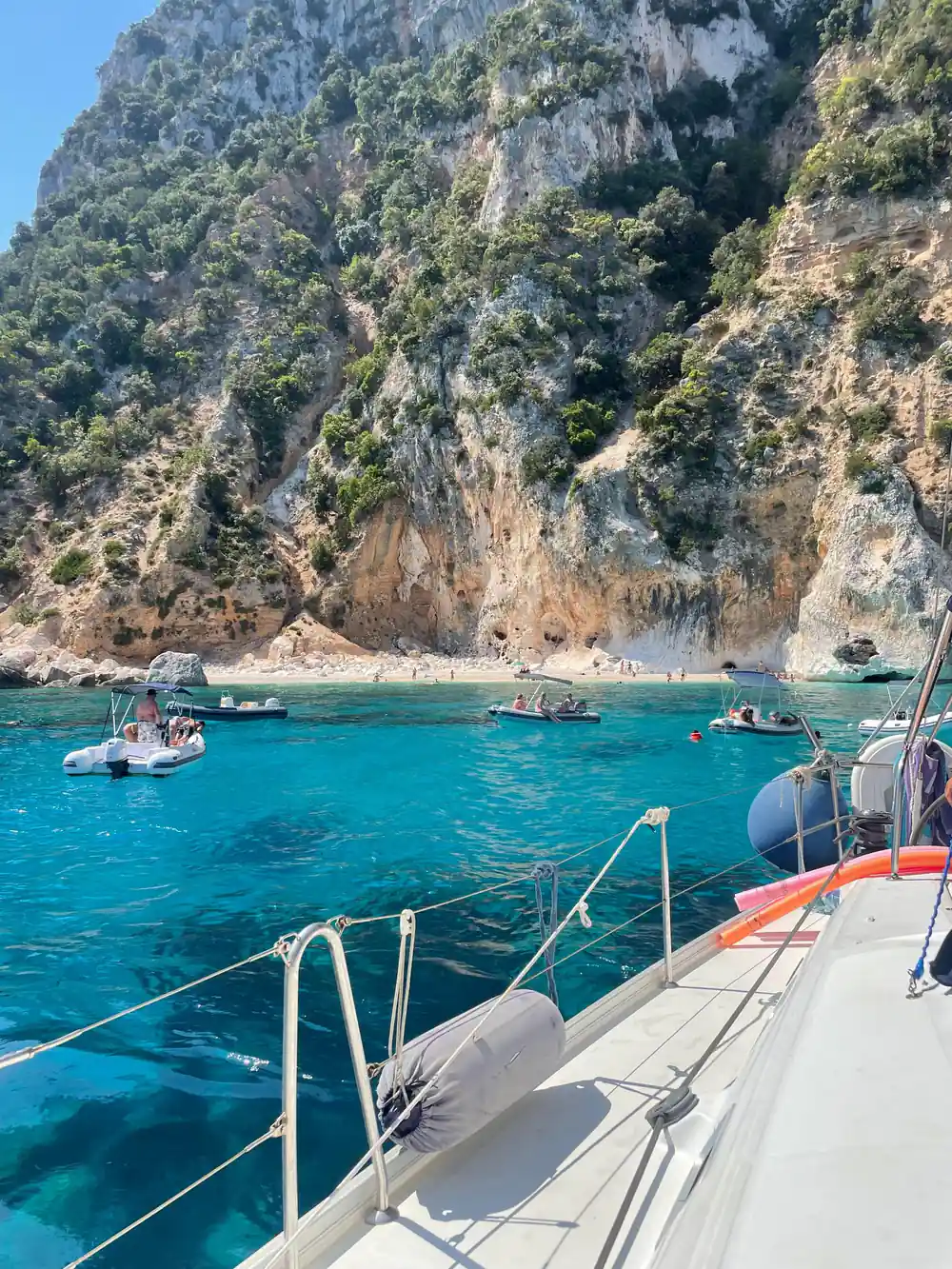
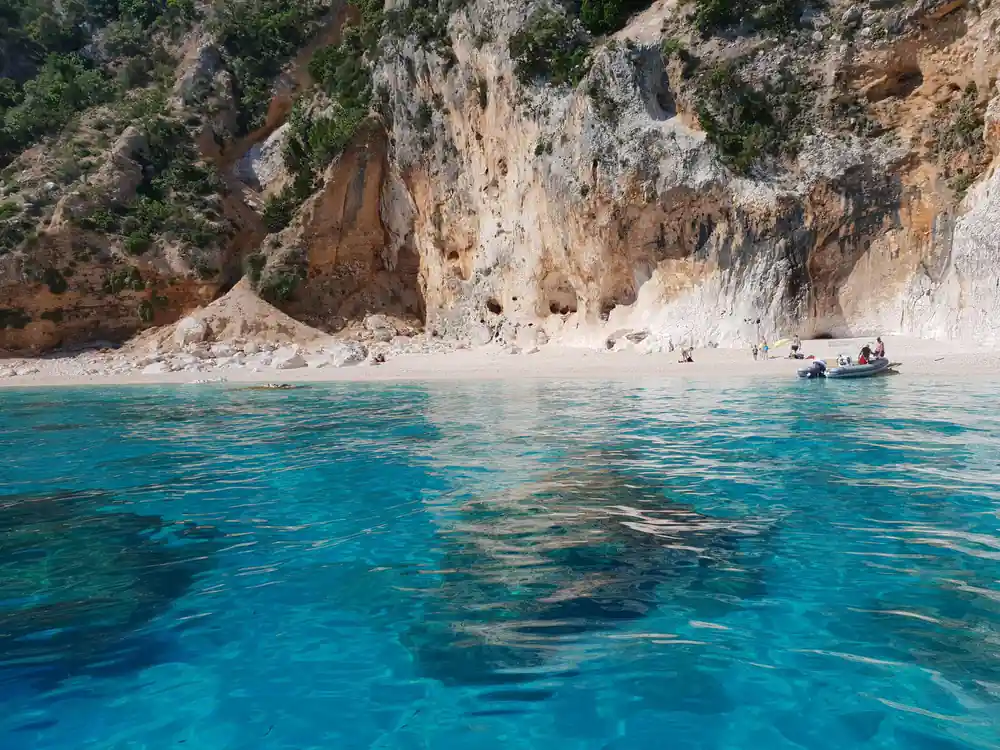
Cala Mariolu is the postcard version of the effect: it is known for its crystal-clear water, white pebbles and dramatic limestone cliffs that plunge into the sea.[10] Those pebbles are also the reason to bring something for your feet. They look wonderful from the deck and feel surprisingly firm when you wade in, so a pair of water shoes earns its place in the bag. The water stays clear because there is little river silt along this stretch of coast and the currents keep it moving.
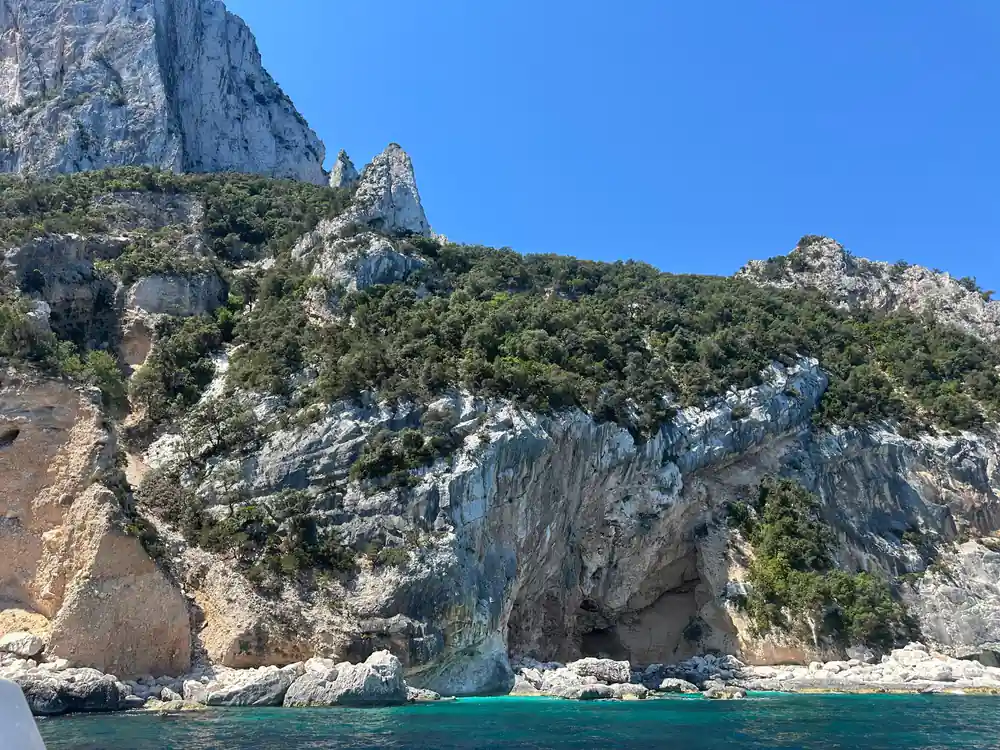
Pale limestone walls drop straight into clear turquoise water along the gulf.
Bue Marino and Fico: caves within the cliffs
Sea caves open all along this coast, and two of them have names you will hear on board. The Grotta del Bue Marino is a long gallery cut through the limestone by water, with stalactites overhead and a still, dark pool at the end. Adult tickets for the Grotta del Bue Marino cost €10 in the ordinary season and €12 in June, July, August and September.[11]
The Grotta del Fico appears as an optional visit on an Arbatax departure and as a stop on a cruise from Santa Maria Navarrese.[12][13] Caves stay cool even on a hot afternoon, and the floors are often damp, so a light layer and shoes with grip are worth having. Photography inside is mostly a matter of steady hands and patience. A cave visit adds a cool, dark pause to an otherwise bright day.
The Mediterranean monk seal in these waters
The Mediterranean monk seal is a shy, heavy-bodied animal that rests in sea caves with underwater entrances rather than on open beaches. That habit suits these cliffs, and the name Bue Marino, sea ox, is the old name for the seal itself. A cave that was once a haul-out looks like nothing special from outside: a dark arch, a lip of rock, a band of shade on the water. Seals feed on fish and octopus and can vanish between one look and the next, so a glimpse is brief and often no more than a dark head surfacing.
Seeing one is luck rather than planning. Seals are wary of engines and voices, they surface briefly and quietly, and they usually keep their distance from a boat. If you do spot a dark head in the water, stay back, cut the noise and let the animal decide where to go. Never steer into a cave mouth or onto a cave beach where a seal could be resting.
from US$276
The Gulf Orosei catamaran boat trip with lunch from Arbatax is the tour booked from this site.[1]
Fish and marine life you may encounter
Under the cliffs the sea is busy. Posidonia meadows cover many of the shallow sandy patches, and where there is seagrass there are sea urchins, saddled bream, salema and small wrasse. Look at the shadowed side of a boulder and you may find a scorpionfish pretending to be stone, or an octopus tucked into a gap with only an eye showing. Damselfish hover over the rocks in loose clouds, and on a calm day you can often see straight to the bottom from the deck.
Snorkelling is the difference between seeing the coast and seeing the sea. A dedicated snorkelling trip in the Orosei Gulf runs 2 hours and starts from US$52, and several dinghy cruises are listed with swim stops.[14][15] A mask helps. So does the discipline to float still for a moment instead of swimming hard, because fish come back the instant you stop moving.
How the cliffs rise above the water
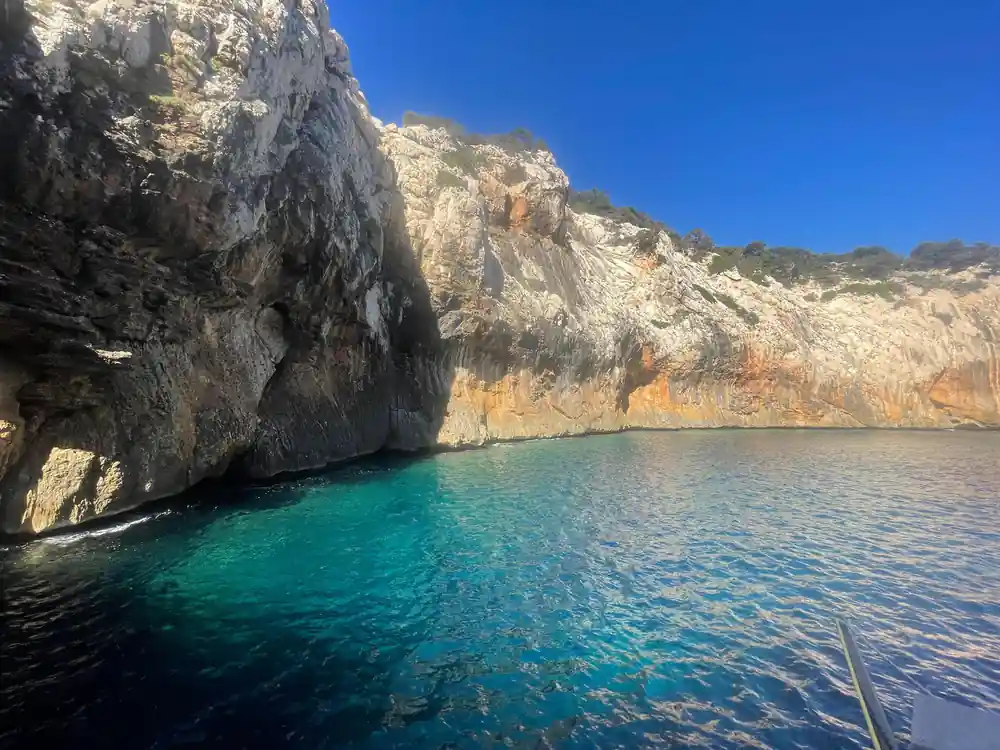
From the water the walls look sheer, and in places they are. The rock climbs in a pale unbroken face from the sea to a scrubby top, with overhangs where the base has been hollowed out and long horizontal notches at the height the water reaches in a storm. Gulls and cormorants use the ledges, and swifts come and go from nests in cracks you would struggle to reach. Behind the cliffs the Supramonte plateau runs inland, dry and stony, grazed thin, and quiet.
Light changes the whole coast through the day. Early boats get flat water and soft grey rock. By mid-morning the limestone is almost white and the shadows under the overhangs go black. In the late afternoon the walls warm up and the eastern coves fall into shade first. Sitting on the shaded side of a deck with a cold drink, watching that happen, is a good part of the point of a slow catamaran day.
Cala Goloritzè and its rock pinnacle
Cala Goloritzè is the bay everyone asks about, and its signature is a tall, slender rock pinnacle standing above the beach like a needle. Access to Cala Goloritzé requires a mandatory reservation from April to October and is limited to a maximum of 250 people at the same time.[3] Boats come in from the sea, so a cruise is one way to see the pinnacle and the pale beach below it.
Several cruises call there. From Arbatax, a RIB trip to Cala Mariolu and Cala Goloritzè runs 3 hours and starts from US$69.[2] A cruise from Dorgali takes 7.5 hours and starts from US$79, with Cala Luna, Cala Mariolu and Cala Sisine among its stops.[6] Further south, a Santa Maria Navarrese cruise calls at Cala Goloritzé, Cala Biriala and Cala Mariolu and starts from US$102.[13]
The tour booked from this site is the catamaran trip with lunch from Arbatax, 8 hours with a live guide in English, French, Italian and Spanish, starting from US$276.[1] It is a slow, comfortable way to spend a day on this coast, and it leaves you free to look at the rock instead of the helm. Arbatax is a tourist neighbourhood of Tortolì, so the harbour is a straightforward run from the resorts nearby.[16]
August sea water temperature in the Gulf of Orosei
Average, minimum and maximum sea water temperature in the Gulf of Orosei in August over the last decade.[4]
Compare from-prices in US dollars
US dollar from-prices of these tour listings; separate child prices are not listed.[1][2][5][6]
When to go and what to book
Planning your boat day
Choose your harbour
Departure points on these listings include Arbatax, Cala Gonone, Dorgali, Orosei and Santa Maria Navarrese, so start with the one nearest your base.
Match the trip length
Shorter trips stay close to a single cove; longer ones run most of the day and reach further along the coast.
Book the popular coves
In high season the popular bays get busy, so reserve early and read the stop list on each listing before you pay.
Pack for rock and water
Water shoes for pebble beaches, swimwear, a towel, sun protection and a light layer for cave visits.
Confirm the start time
The catamaran listing runs 8 hours; check availability to see the starting time for your date.[1]