In a nutshell
- The Gulf of Orosei runs for 30 kilometres along the eastern coast of Sardinia, and the protected area here is the Parco Nazionale del Golfo di Orosei e del Gennargentu.[1][2]
- The Selvaggio Blu trekking route starts in Pedra Longa and ends in Cala Luna, on unspoiled paths hanging between sea and mountain.[3]
- Adult tickets for the Grotta del Bue Marino cost €10 in the ordinary season and €12 in June, July, August and September.[4]
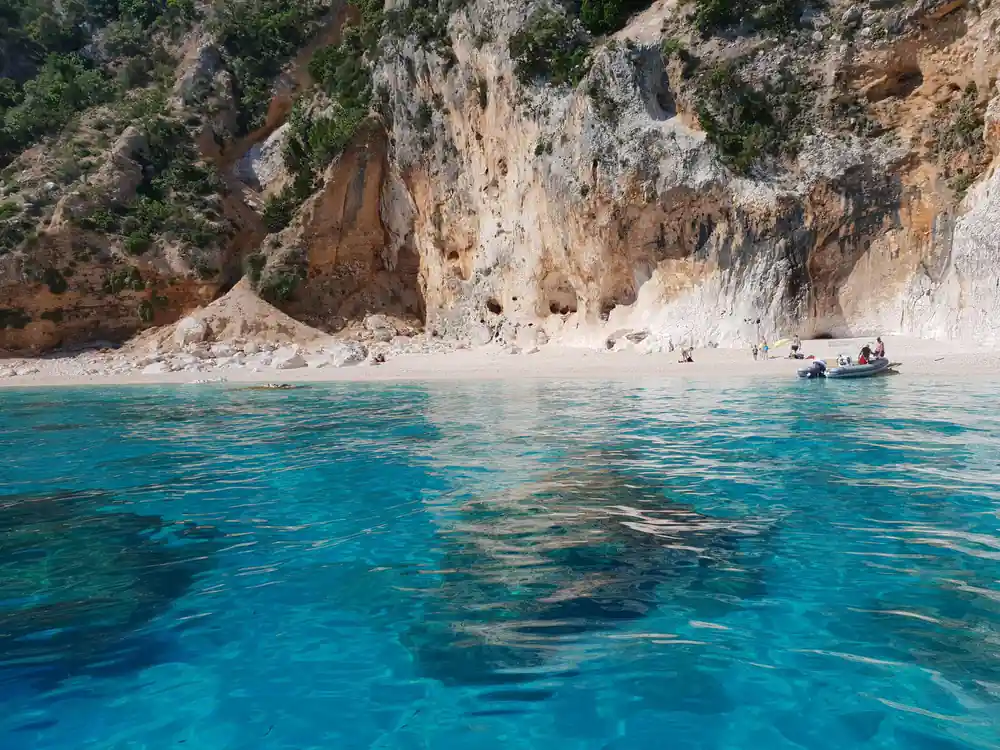
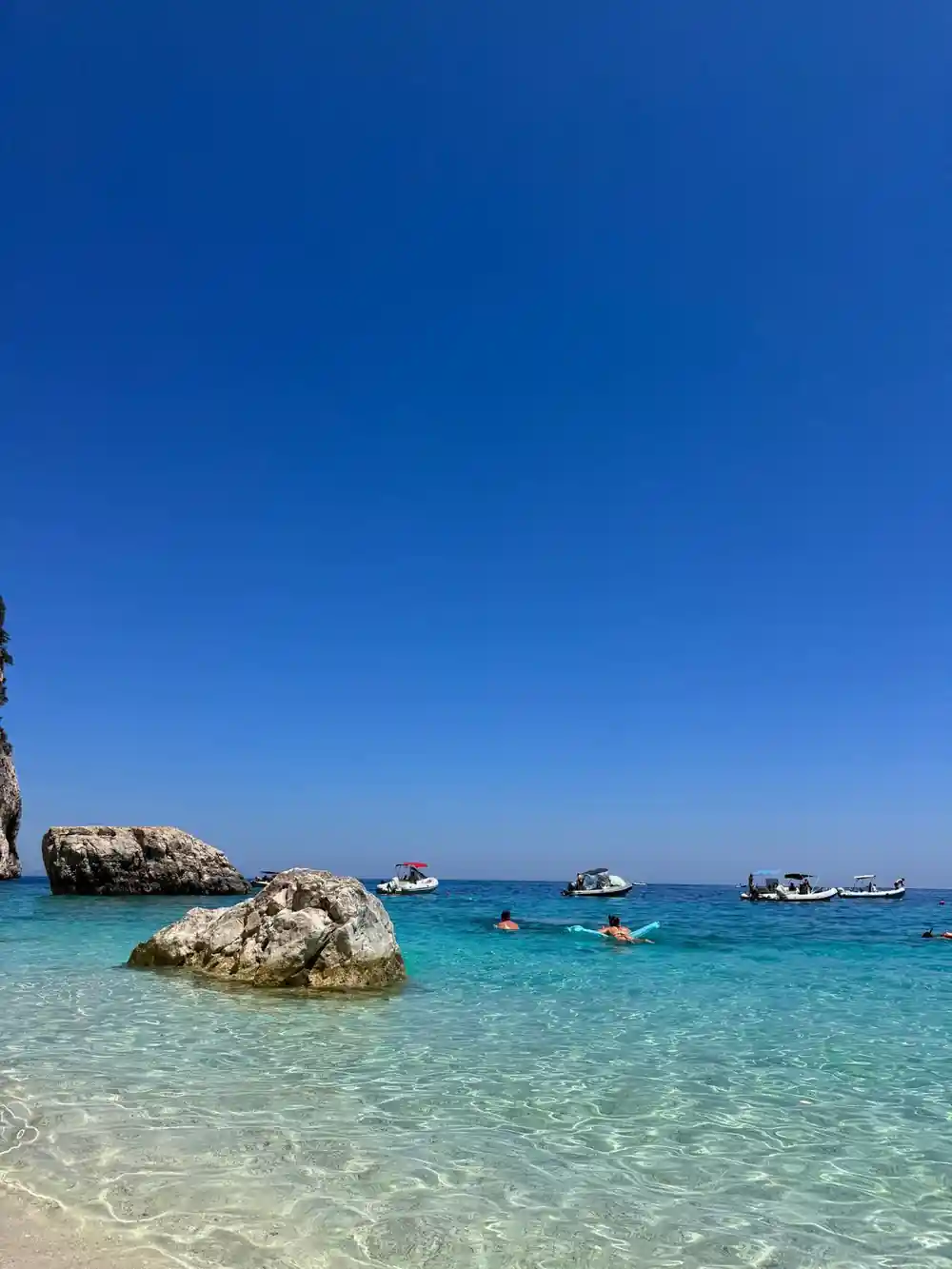
- Cala Mariolu is known for crystal-clear water, white pebbles and limestone cliffs that plunge into the sea.[5]
- Access to Cala Goloritzé requires a mandatory reservation from April to October and is limited to 250 people at the same time.[6]
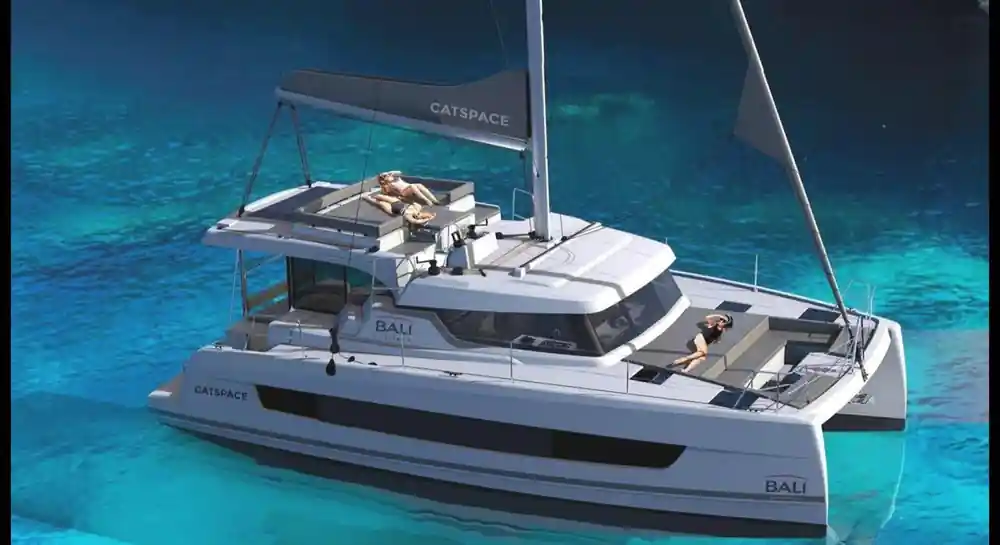
- Top choice Orosei Catamaran with Lunch from US$276 Duration8 hours[7]Rating4.91 from 268 reviews[7]LanguagesEnglish, French, Italian, Spanish[7]CancellationFree cancellation up to 24 hours[7] Check availability
- Baunei Coast Day by Boat from US$75 Duration9 hours[8]Rating4.42 from 549 reviews[8]LanguagesItalian, English[8]CancellationFree cancellation up to 24 hours[8] See this tour
- Mariolu and Goloritzè RIB from US$69 Duration3 hours[9]Rating4.84 from 705 reviews[9]LanguagesEnglish, Italian[9]CancellationFree cancellation up to 24 hours[9] See this tour
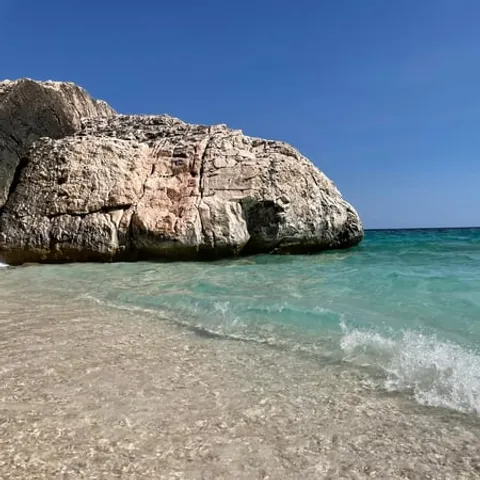
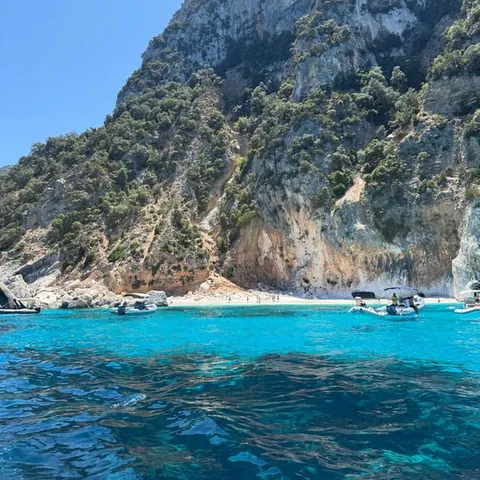
The Selvaggio Blu trekking starts in Pedra Longa and ends in Cala Luna, winding through unspoiled paths, hanging within sea and mountain.
Who this coast is for
Things to check
- Check the departure point: trips leave from Arbatax, Cala Gonone and Santa Maria Navarrese.
- Access needs a reservation from April to October, 250 people maximum at the same time.[6]
- The catamaran day from Arbatax runs 8 hours.[7]
- Guiding on the catamaran trip is in English, French, Italian and Spanish.[7]
Why This Coast Remains Roadless and Wild
The Gulf of Orosei runs for 30 kilometres along the eastern coast of Sardinia, and the protected area that carries its name is the Parco Nazionale del Golfo di Orosei e del Gennargentu.[1][2] Behind the coves the Supramonte plateau lifts into limestone, and for long stretches there is simply no road along the shore. That shapes every visit. The beaches, the caves and the old mule tracks are reached from the water or from paths that drop steeply through the scrub, and the coastline keeps its own pace.
Boats are the practical way to see the coast. Cala Luna lies on Sardinia's central eastern coast and is reachable from Cala Gonone, a hamlet in the township of Dorgali in the province of Nuoro.[11] Departures also run from Arbatax and from Santa Maria Navarrese, which puts different stretches of cliff within a short crossing. On foot the same coast is a serious proposition, hot and exposed, best left to confident walkers with proper shoes, plenty of water and a plan for the middle of the day.
When you plan, think about which harbour suits you. Arbatax is the closest base to the Ogliastra villages, Cala Gonone puts you under the sheerest cliffs, and Santa Maria Navarrese sits at the southern end of the gulf. Wherever you start, the same cliffs, caves and coves line up along the day, and the water changes colour with every turn of the boat.
The Shepherds Who Cut Paths Down the Cliffs
Ogliastra's shepherds worked the high ground above the sea, and the routes they used are still visible as narrow tracks that fall from the plateau to the coves. Some are waymarked walking routes today. The Selvaggio Blu trekking starts in Pedra Longa and ends in Cala Luna, winding through unspoiled paths, hanging within sea and mountain.[3] It is a route that explains the coast better than any viewpoint does: goat paths, sharp rock, and the sea always somewhere below.
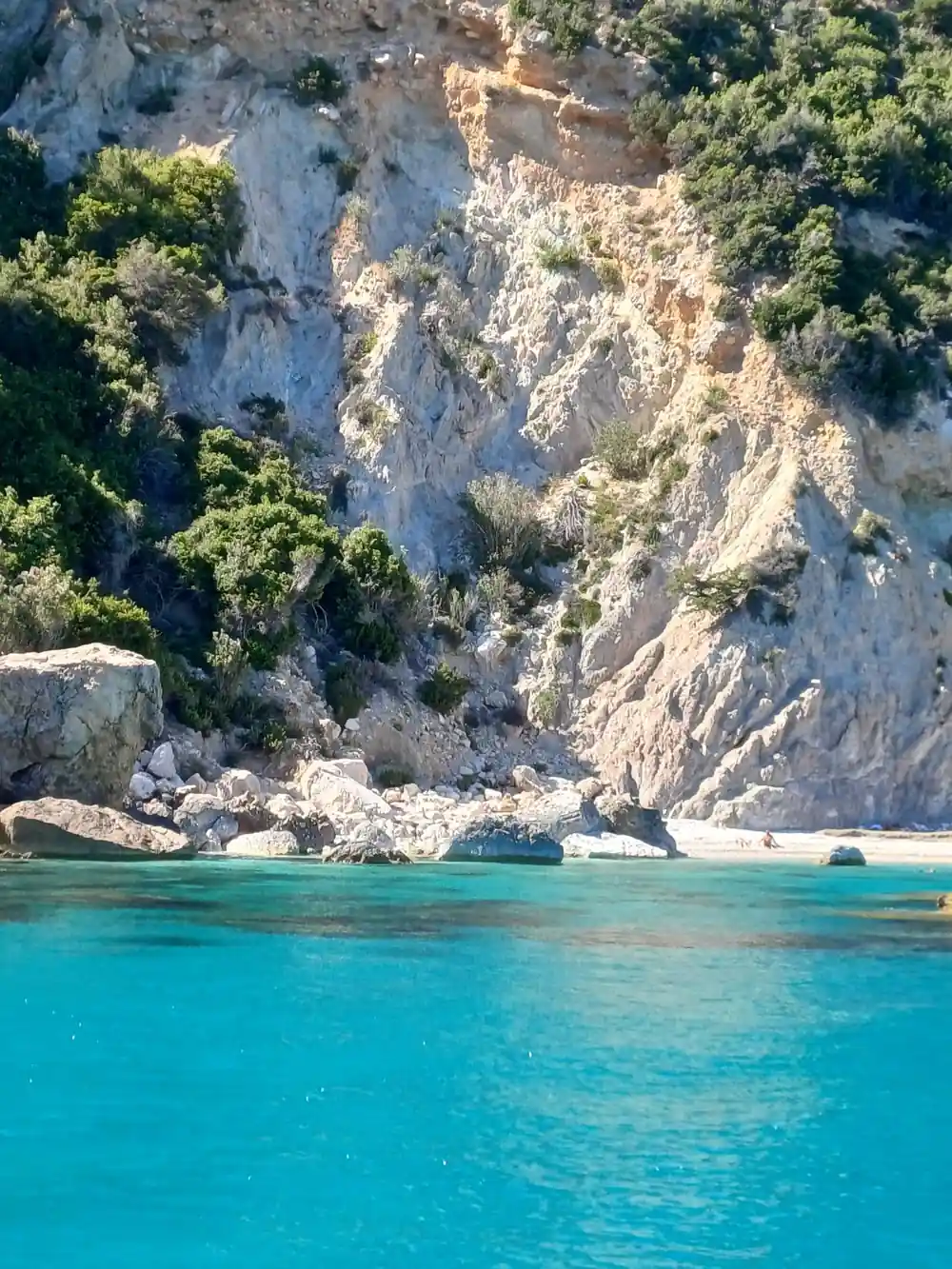
Access rules follow the same logic of keeping small places small. Access to Cala Goloritzé requires a mandatory reservation from April to October and is limited to a maximum of 250 people at the same time.[6] If you hope to land there or to swim ashore, arrange your reservation before you travel. Boats still pass the bay, and the pinnacle that stands above the water is one of the sights of the gulf, whether or not you get your feet on the pebbles.
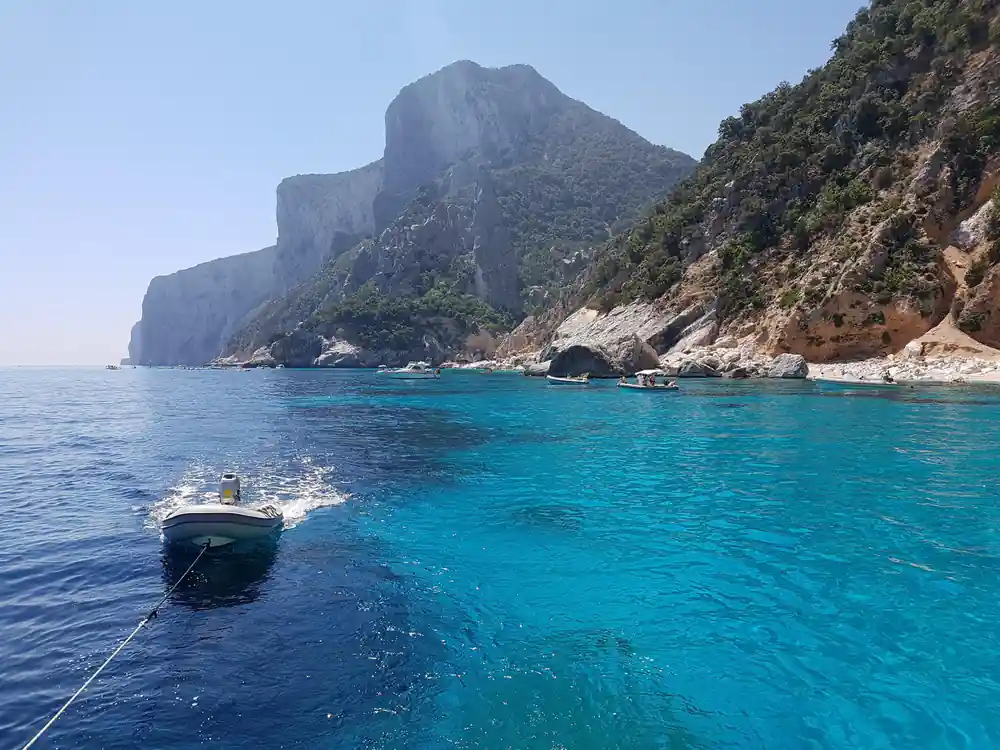
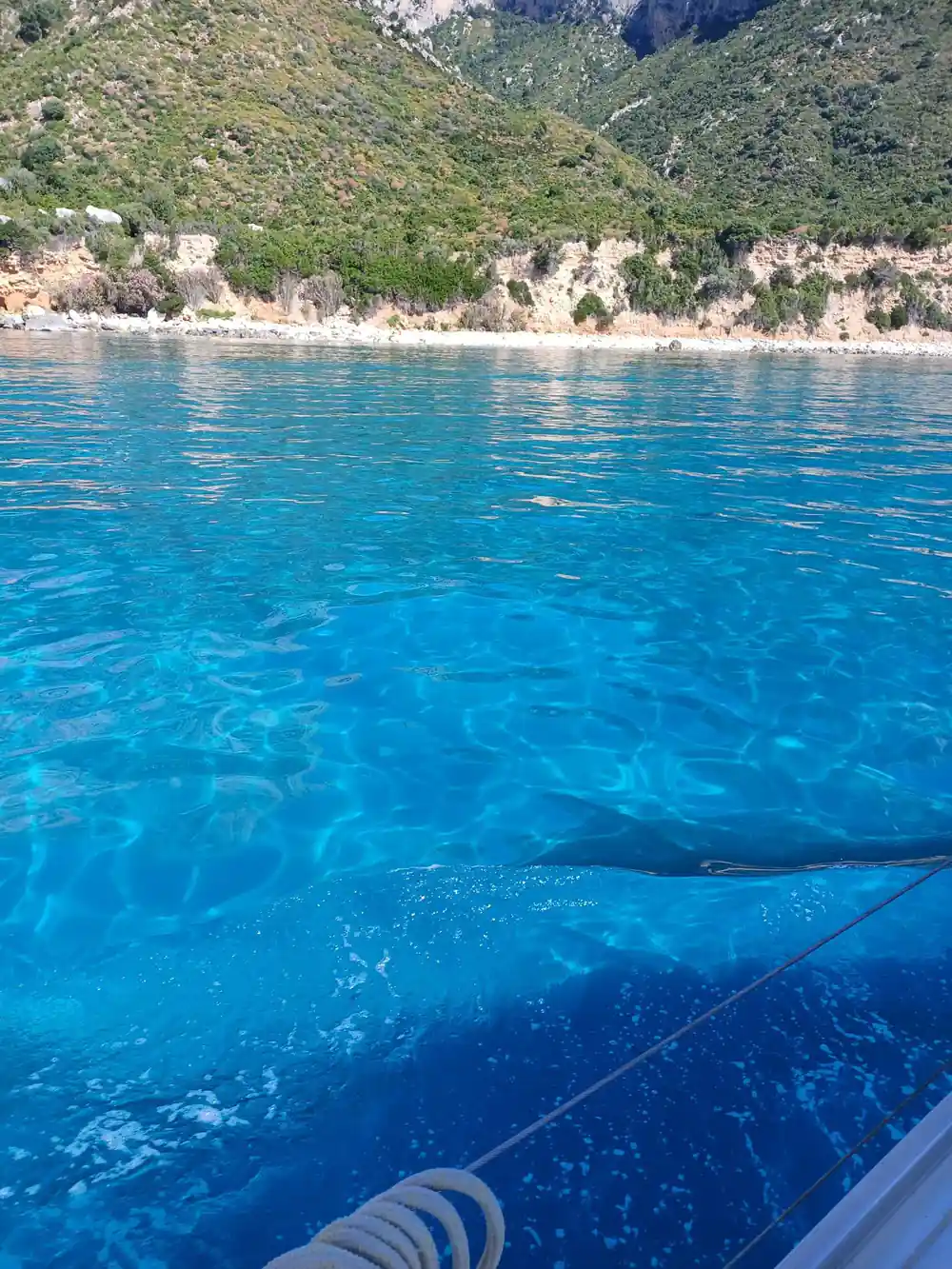
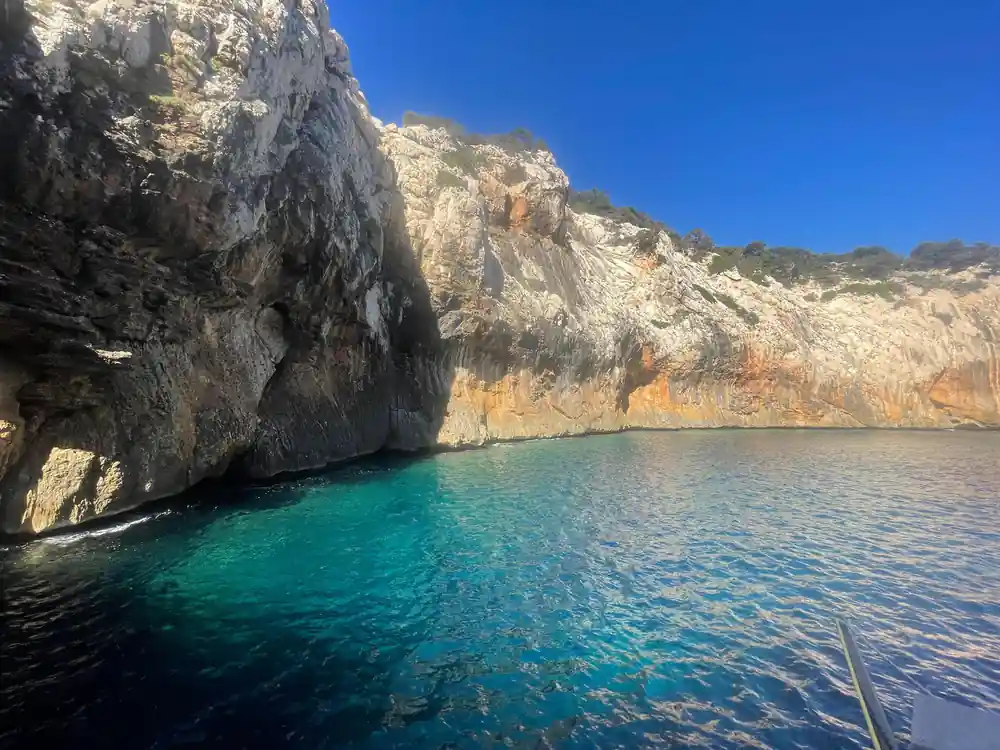
Limestone cliffs fall straight into turquoise water along the Gulf of Orosei.
Charcoal Burners and the Forest Economy
Above the cliffs, holm oak and juniper cover the slopes, and for generations these woods were a workplace rather than a view. Charcoal burners built circular kilns in clearings, stacked cut wood, covered it with earth and let it smoulder for days, then carried the sacks down to the villages and the little harbours on mules. Terraces, flat charcoal platforms and old tracks still show up in the undergrowth if you know what you are looking at.
The forest also supplied boat timber, tools and firewood, and the same slopes are protected country: the Parco Nazionale del Golfo di Orosei e del Gennargentu is a protected area in Sardinia.[2] Walking here is quiet. You pass stone huts, dry walls and clearings that are clearly made rather than natural, and you get a sense that this apparently empty landscape was worked hard and carefully for a very long time.
Pane Carasau: The Bread That Travels by Sea
Village bakeries here make pane carasau, a paper-thin flatbread baked twice until it is dry and crisp. It keeps for months and it travels well. Shepherds carried stacks of it to the high pastures, fishermen took it out on the water, and families sent it with anyone heading down to the coast. Sprinkled with olive oil, salt and maybe a little tomato, it softens as it sits and becomes something quite different from what comes out of the oven.
Look for it in bakeries and small markets across Ogliastra, in Baunei, Dorgali, Orosei and Tortolì, sold in tall stacks wrapped in paper. A boat day is a good place to meet it: bread, cheese, tomatoes and a piece of fruit make a simple travelling meal, and eating it on deck with the cliffs behind you is part of the pleasure. Ask for the fresh, softer version, still warm and folded, if you plan to eat it the same day.
Bread like this is not a souvenir so much as equipment. It survives a hot car, a rucksack and a week in a cupboard, and people use it at home for quick meals: broken into pieces and wetted with water and olive oil, layered with tomato and pecorino, or simply dipped into a bowl of hot milk in the morning. Buy a stack and you will be eating it all week.
from US$276
The catamaran day from Arbatax is the trip booked from this site: 8 hours on the water with lunch, rated 4.91 from 268 reviews.[7]
Cannonau Wine and the Sardinian Table
Cannonau is the red grape of these hills, grown on granite soils and poured in village trattorias from Ogliastra up towards Nuoro. It is a warm, generous wine and it suits the food: roast suckling pig, wild boar, cured sausage, sheep's cheese and the flatbread that turns up at every meal. The coast adds its own ingredients, sea urchin, mullet, lobster and bottarga grated over pasta, and the cooking tends to be plain rather than fancy.
Eating well here is not complicated. Book a table in Baunei, Dorgali or Orosei for the evening, and take a boat day for lunch on the water: the catamaran trip from Arbatax is listed with lunch and runs for 8 hours.[7] Finish with a glass of Cannonau on a terrace near the harbour, watching the boats come back in, and you have the whole day covered.
Ogliastra: A Blue Zone for Longevity
Ogliastra has a reputation for long life, and the shape of daily life here is easy to see: villages high on the plateau, small gardens and vineyards, sheep and goats on the slopes, and old people still walking the lanes in the evening. The coast and the interior belong together. A morning on the water and an afternoon in a mountain village make a good day, and the two halves of the province sit within an easy drive of each other.
If you want a taste of the interior, look at the trips that leave the coast behind: jeeps onto the Golgo plateau above Baunei, guided hikes into the Gorropu canyon, and horseback rides on the beach at sunset. These are farm country days, with stone walls, donkeys, cheese and a long lunch, and they make a good counterweight to a morning spent swimming from a boat.
Sea Caves as Historical Shelter and Refuge
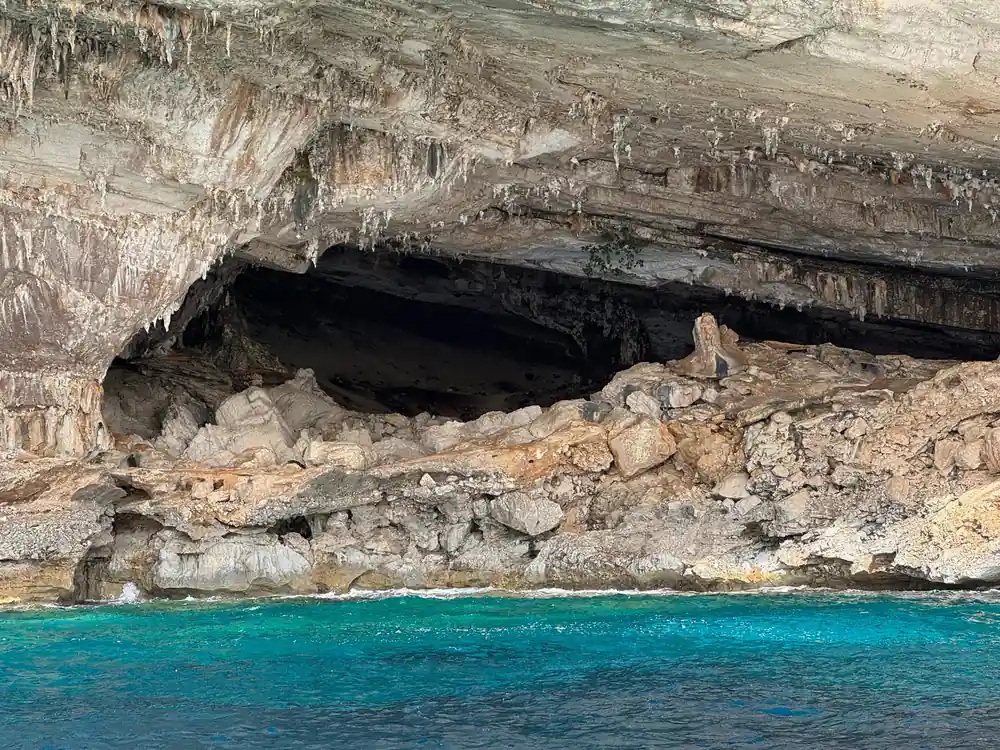
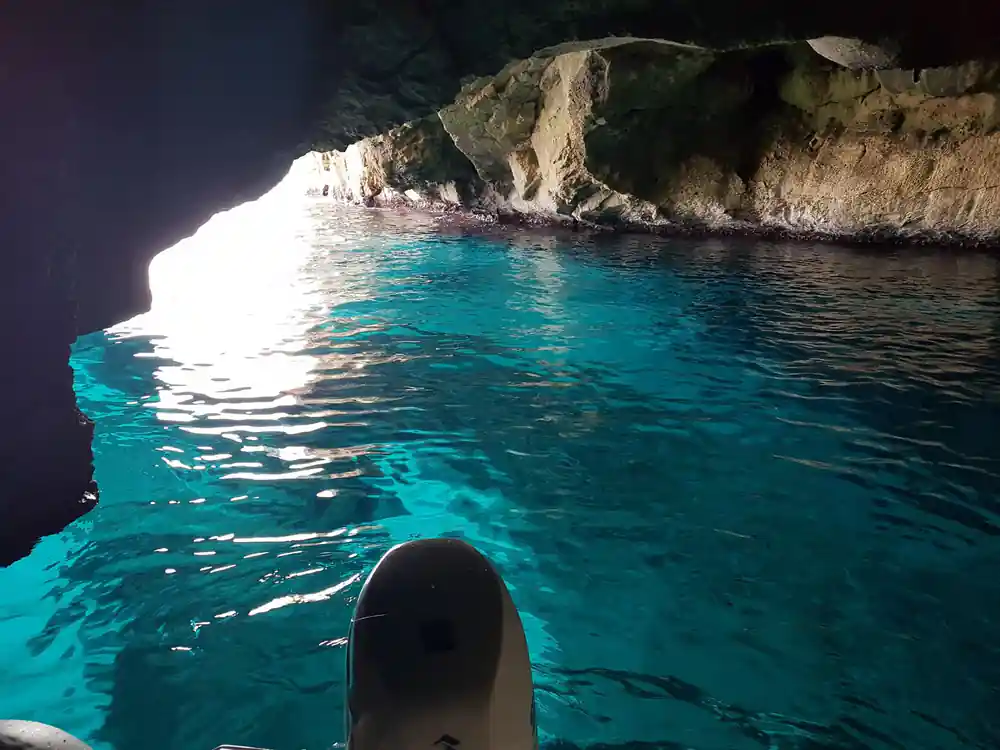
Sea caves are the oldest shelters on this coast, cut by water into the limestone and used by people and animals long before anyone came here on holiday. The Grotta del Bue Marino is the cave most travellers visit, reached by boat beneath the cliffs and then on foot along a walkway inside. Adult tickets for the Grotta del Bue Marino cost €10 in the ordinary season and €12 in June, July, August and September.[4]
For caves near Arbatax the usual approach is by sea: you join a boat at the harbour, and the crew points out the cave mouths as the cliffs slide past. Back on land, the Rocce Rosse of Arbatax are named after the porphyry cliffs that rise from the sea in the Red Rocks Bay east of the port, with white rocks and tall red granite boulders around them.[12]
Visiting a cave is easy to add to a boat day. Trips run from several harbours along the gulf, and many itineraries pass at least one cave mouth between swim stops. If you want to go inside, check the timetable when you book. Not every departure lands at the cave. Pack a light layer too, since the air inside stays cool whatever the weather is doing outside.
August sea temperature in the Gulf of Orosei
Figures for the Gulf of Orosei in August over the last decade.[10]
Boat trip from-prices for the Gulf of Orosei
Only one from-price is listed per trip, so the same figure is shown for adults and children.[7][8][9]
When to travel this coast
Planning your day
Pick a harbour
Trips leave from Arbatax, Cala Gonone and Santa Maria Navarrese. Pick the base that fits the rest of your week.
Check the access rules
Access to Cala Goloritzé requires a mandatory reservation from April to October, up to 250 people at the same time.[6]
Pack for the water
Water shoes, a snorkel, sun cream and a light layer. Pebble beaches are lovely and hard on bare feet.
Eat on board
The catamaran trip from Arbatax is listed with lunch and runs for 8 hours.[7]
Leave time for land
Keep an afternoon for a village, a bakery and a glass of Cannonau away from the harbour.
See the cliffs, caves and coves of the Gulf of Orosei from the water
from US$67